A Bad Capacitor Killed the Cooling - Here's What We Found
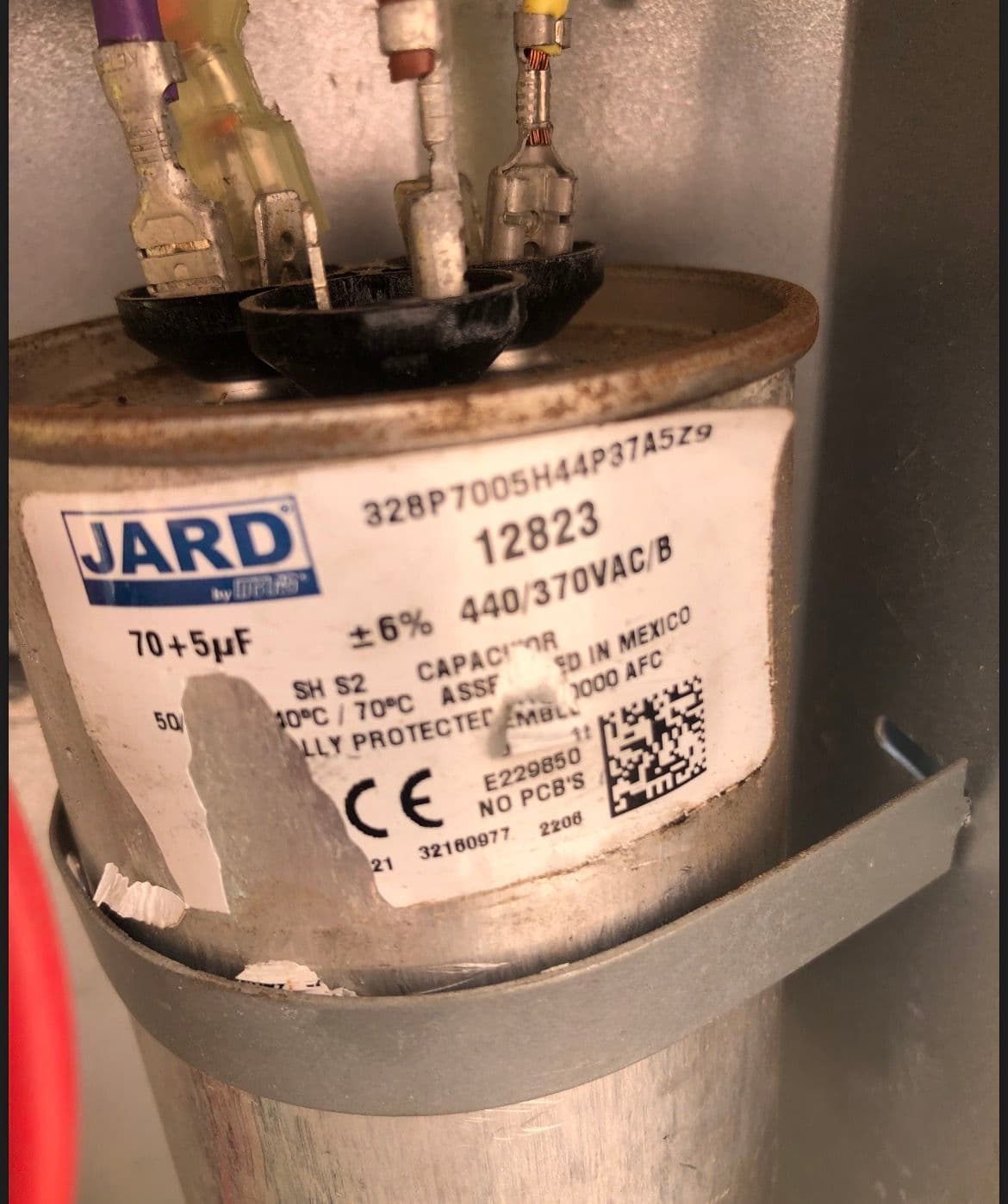
When an AC stops cooling, most homeowners assume the worst - refrigerant leak, compressor failure, something expensive. A lot of the time, it comes down to one small part. That was exactly the case here.
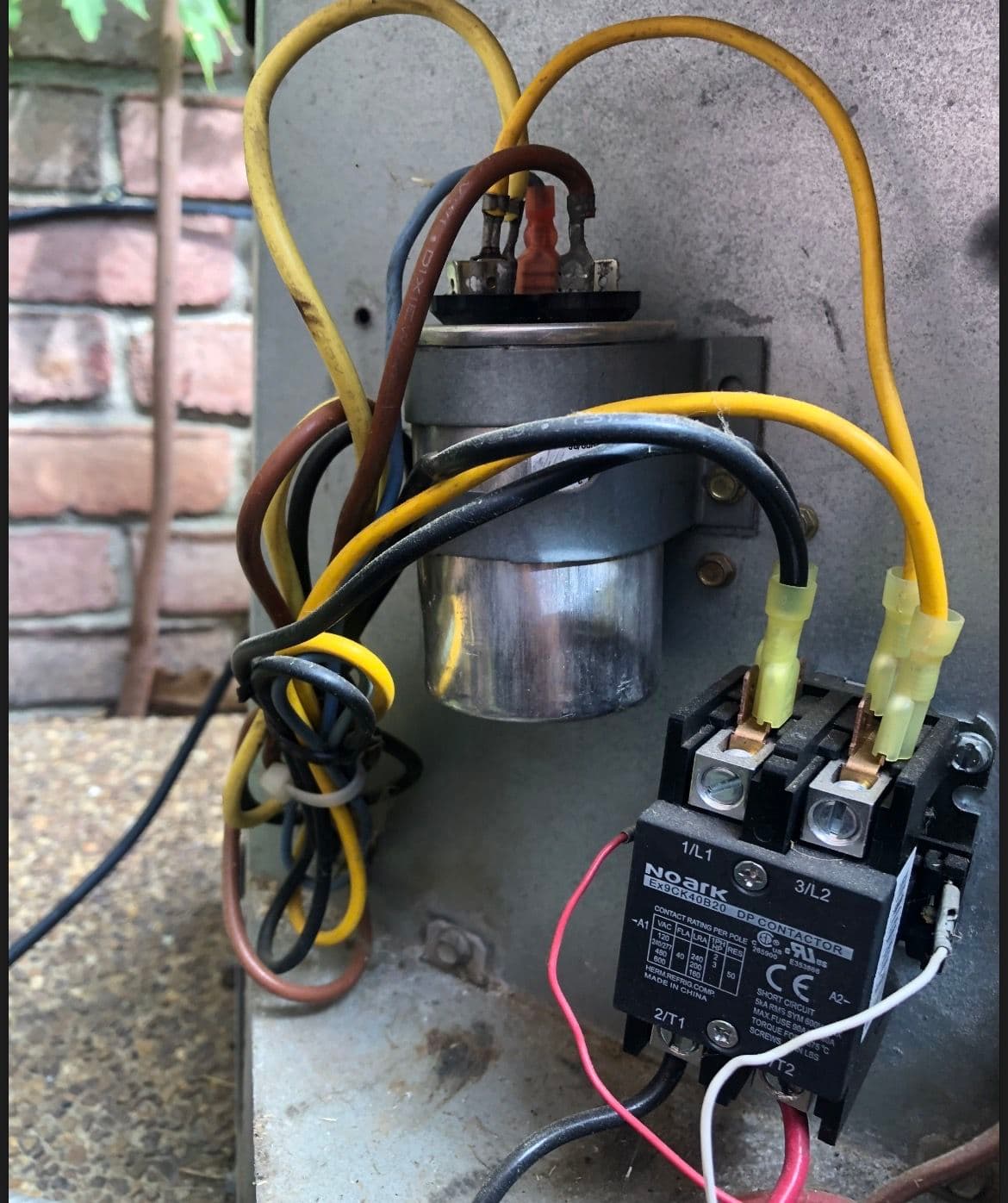
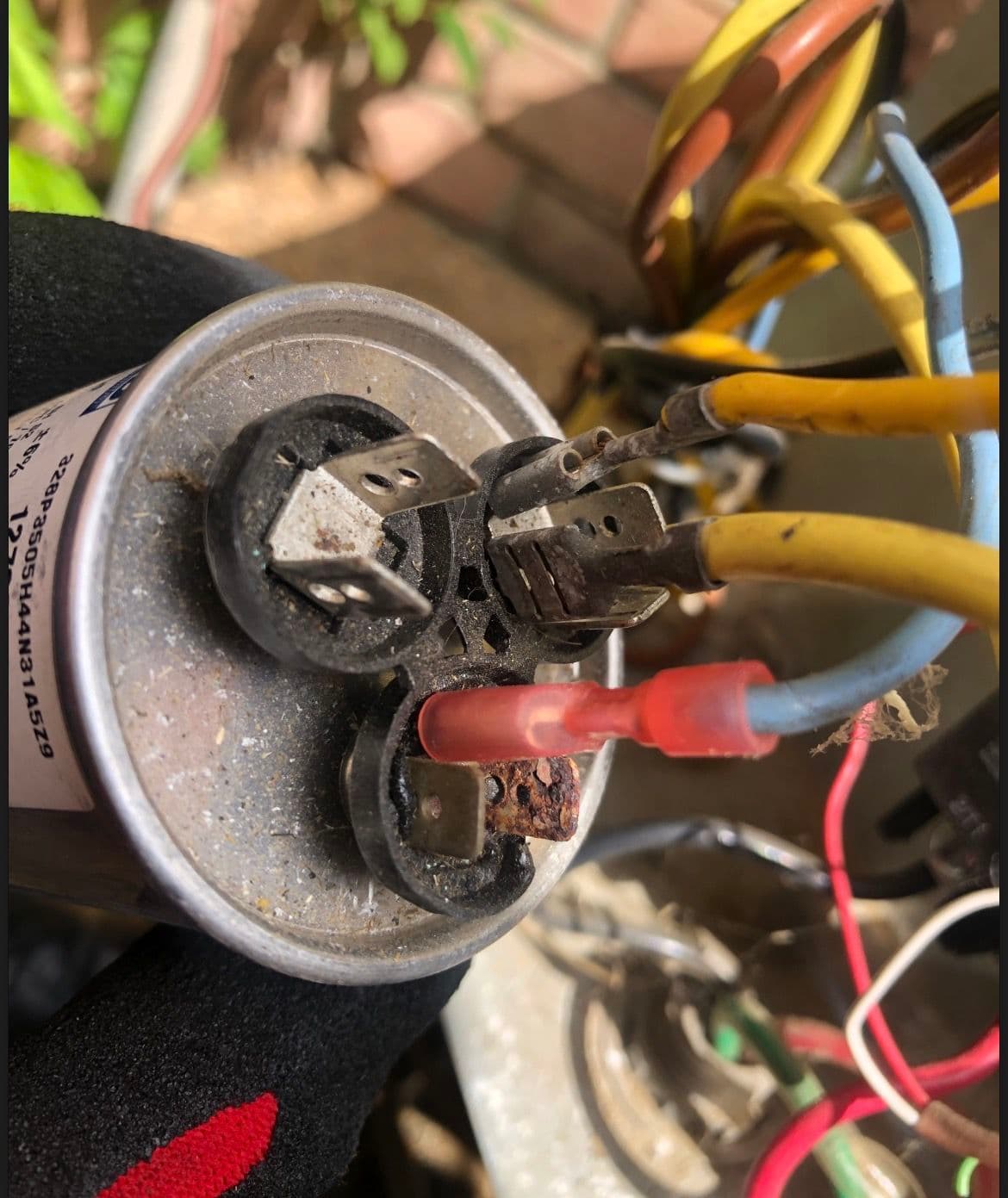
The capacitor we pulled off this unit was corroded and worn out. You can see the terminals were oxidized badly, which is a dead giveaway that it had been struggling for a while. A bad capacitor means the compressor or fan motor can't get the electrical boost it needs to start properly. The system hums, runs in short bursts, or just sits there doing nothing. No cool air. That's it.
Our AC no cooling diagnostic process starts by running through the most likely culprits before jumping to conclusions. Capacitors are one of the first things we check - they're cheap to replace and they cause a lot of headaches when they fail. We swapped this one out for a new JARD 70+5 MFD unit, which is a quality replacement that meets the system's specs and holds up well over time.
What makes this repair worth pointing out is how common it is. We see this constantly. A unit that's humming, struggling to start, or not keeping up with the thermostat setting is often just telling you the capacitor is on its way out. Catching it early through HVAC system diagnostics saves you from the bigger problems that can follow - like a burned-out compressor from repeatedly trying to start without enough power.
If your system is acting up this summer and you're not sure what's going on, getting a proper AC diagnostic done is the smartest first move. It takes the guesswork out of it and usually costs a lot less than people expect.