A Clogged Condensate Drain Line Cleared Before It Caused Real Damage
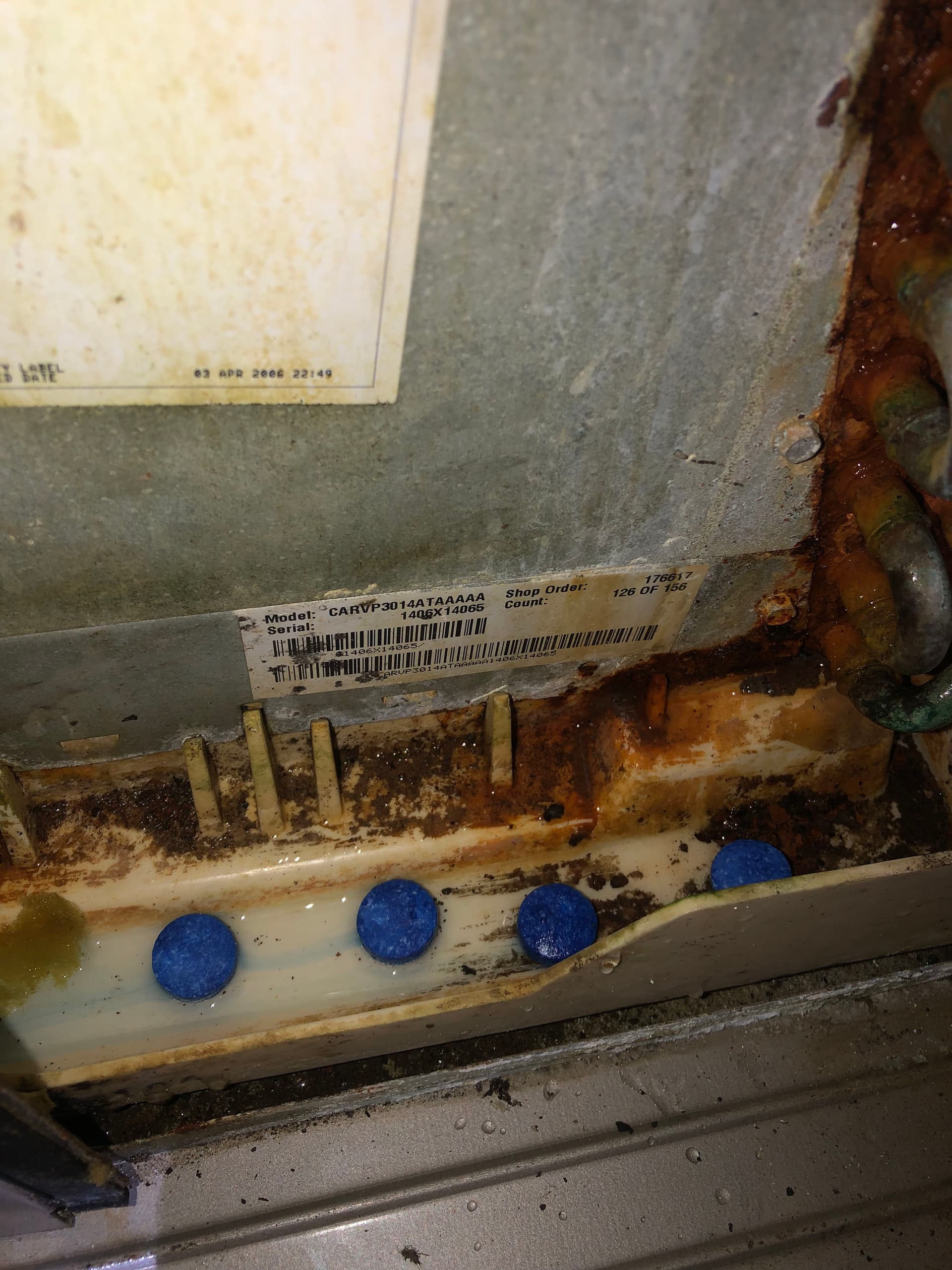
A clogged condensate drain line is one of those problems that doesn't announce itself loudly - at first. Water backs up slowly. Rust starts forming. Moisture creeps into places it shouldn't be. And by the time most homeowners notice something's wrong, the damage is already in progress.
That's exactly what we were dealing with here. The drain pan showed visible rust buildup and standing water residue, which tells you the line had been struggling for a while. Left alone, that kind of backup can lead to water damage, mold, and a repair bill that's a lot harder to swallow than a simple drain clearing.
We got the line cleared out and flowing properly again. We also placed condensate pan tablets in the drain pan - those blue tabs you can see sitting in the pan. They help prevent algae and microbial growth from building up inside the line, which is one of the most common causes of clogs in the first place. It's a small step that goes a long way toward keeping things clear between service visits.
On an older unit like this one, staying ahead of condensate issues is especially important. The system is already working harder to keep up, and a backed-up drain adds unnecessary stress on top of that. Catching it early keeps things running and avoids the kind of compounding damage that turns a minor fix into a major one.
If your system has been running but you've noticed moisture near the unit, a musty smell, or the system shutting off unexpectedly - a clogged condensate drain could be the reason. It's worth having it looked at before it becomes something bigger.