AC Inspection, Refrigerant Recharge and System Diagnostics Done Right
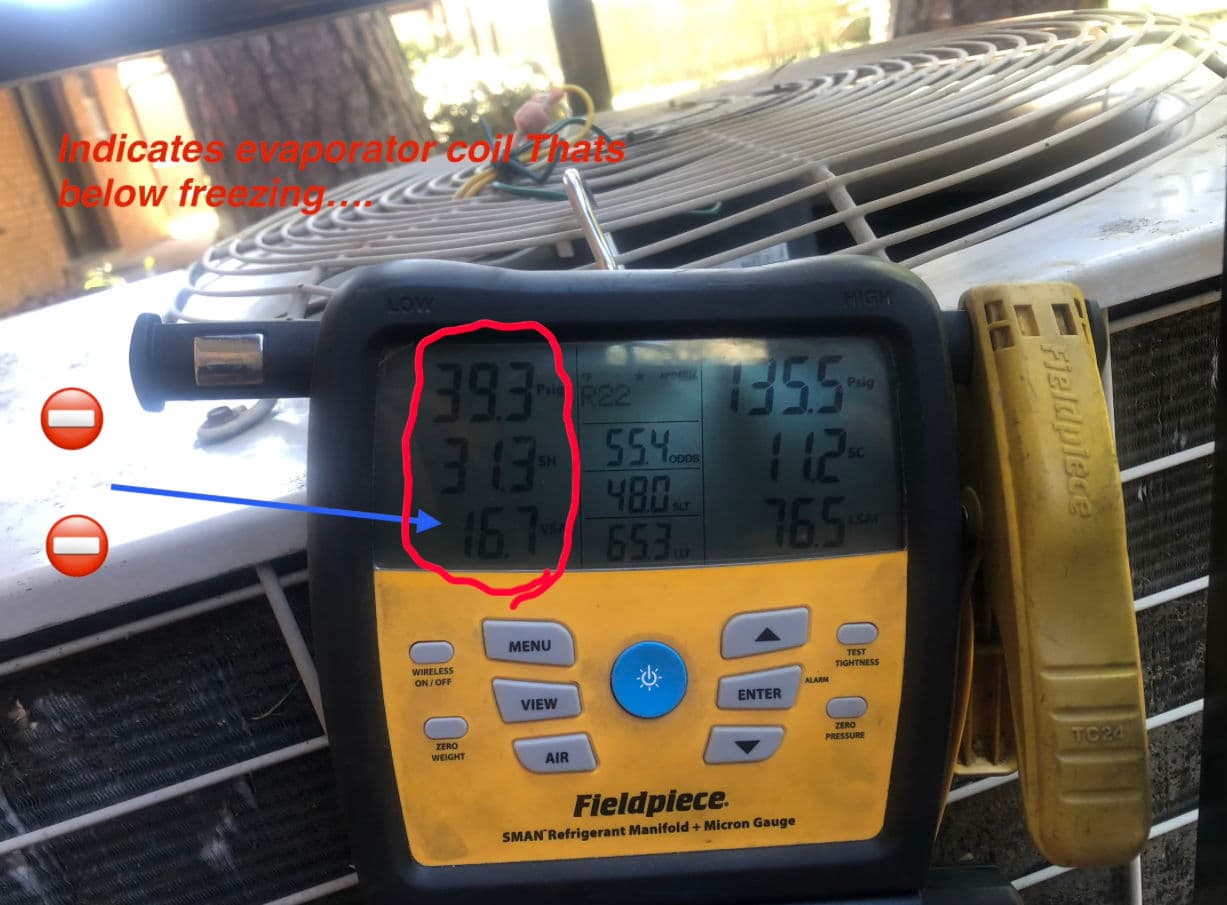
When your AC is running but not really cooling, low refrigerant is one of the first things we check. It's one of the most common reasons a system underperforms - and it's also one of the easiest things to miss without the right tools and know-how.
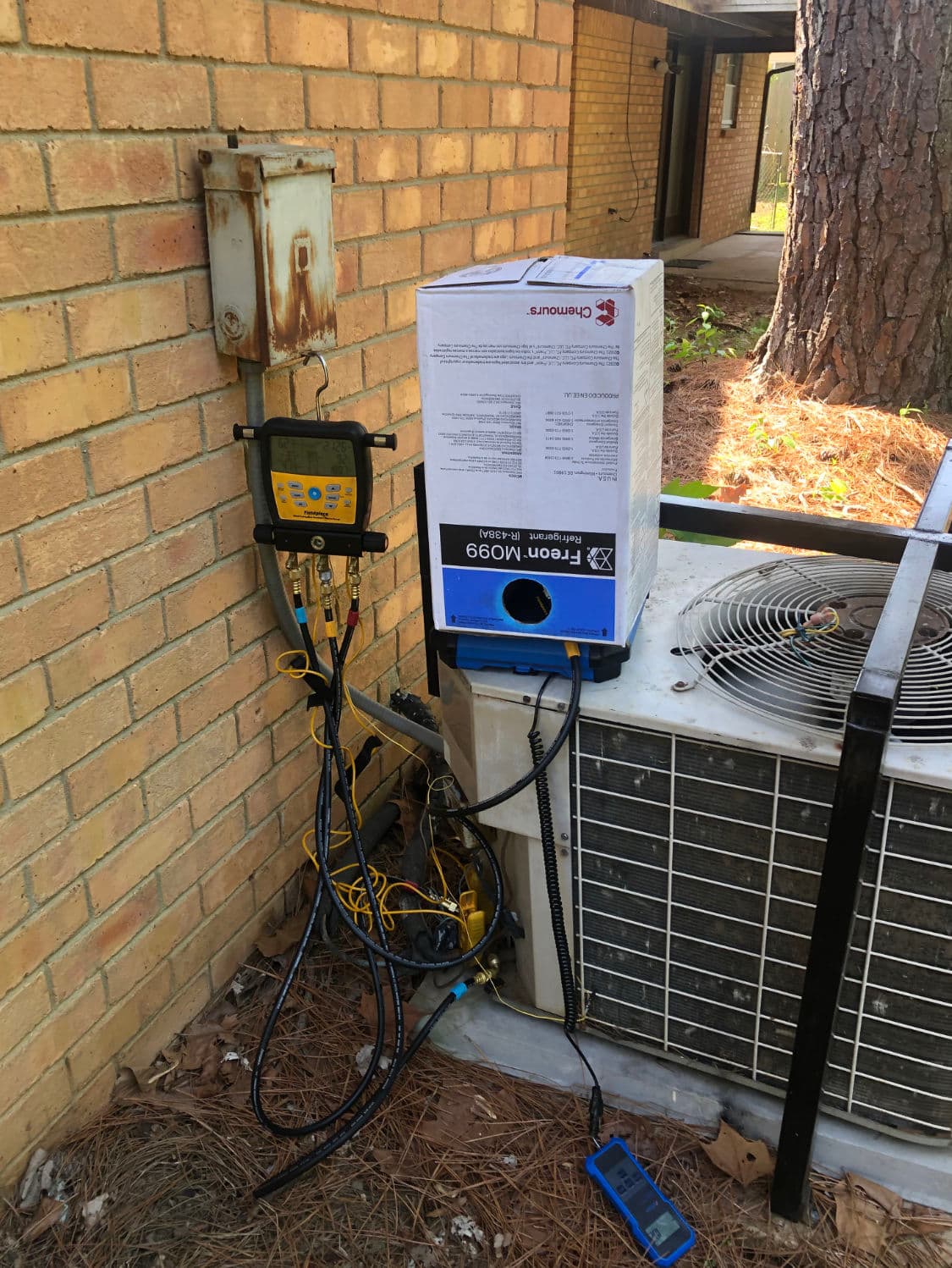
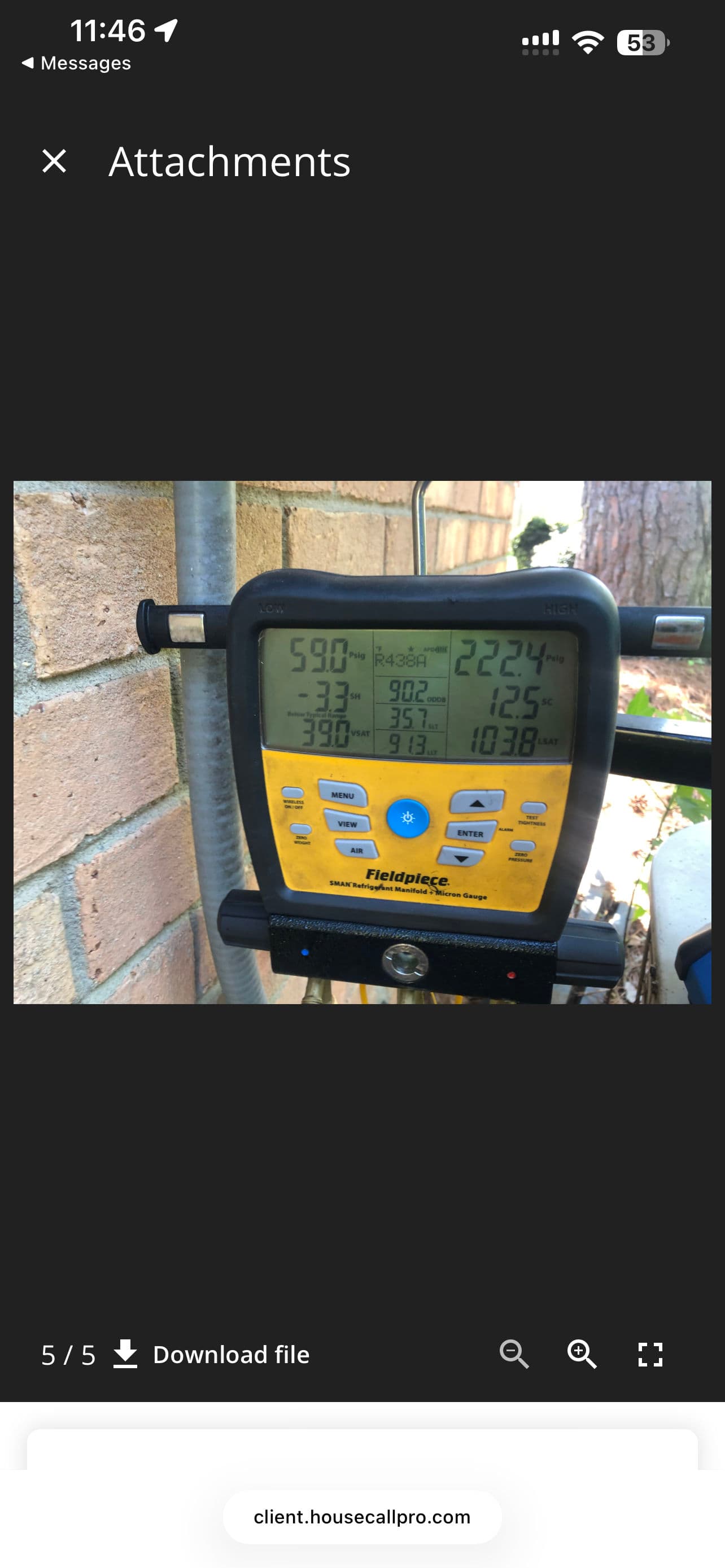
Here's what a proper diagnosis actually looks like. We connect our Fieldpiece SMAN manifold gauge to pull live pressure and temperature readings straight from the system. That data tells us exactly what the refrigerant is doing inside the unit. We're looking at suction pressure, superheat, subcooling - all the numbers that paint a full picture of system health. Guessing doesn't cut it. The readings guide every decision we make.
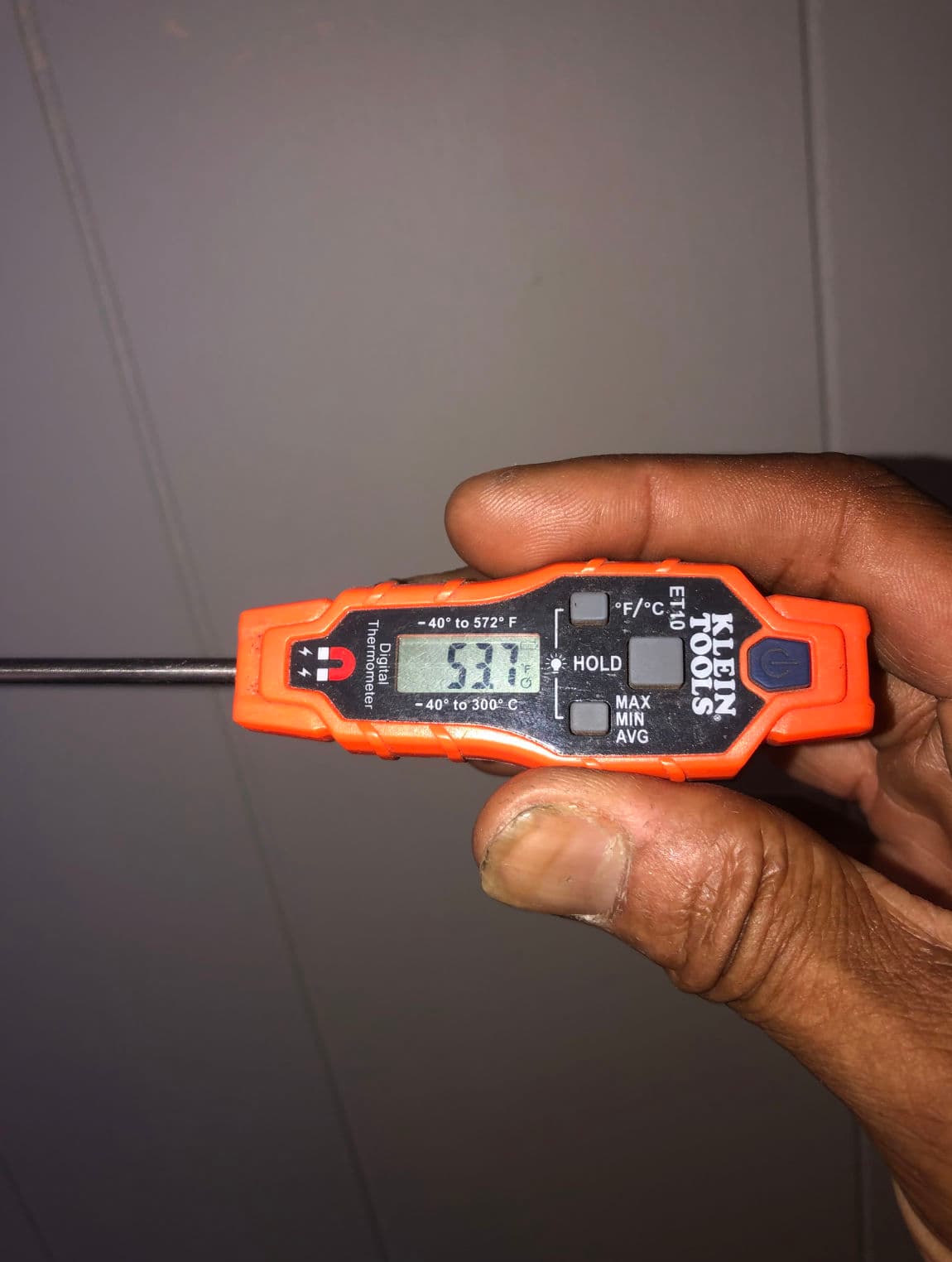
In this case, the evaporator coil temperature was reading below freezing - a clear sign the system was low on refrigerant and working way harder than it should have been. A coil that cold causes the system to ice up, restricts airflow, and eventually stops cooling your home altogether. We also used a Klein digital thermometer to verify supply air temps at the register, giving us a real-world check to go alongside the gauge data.
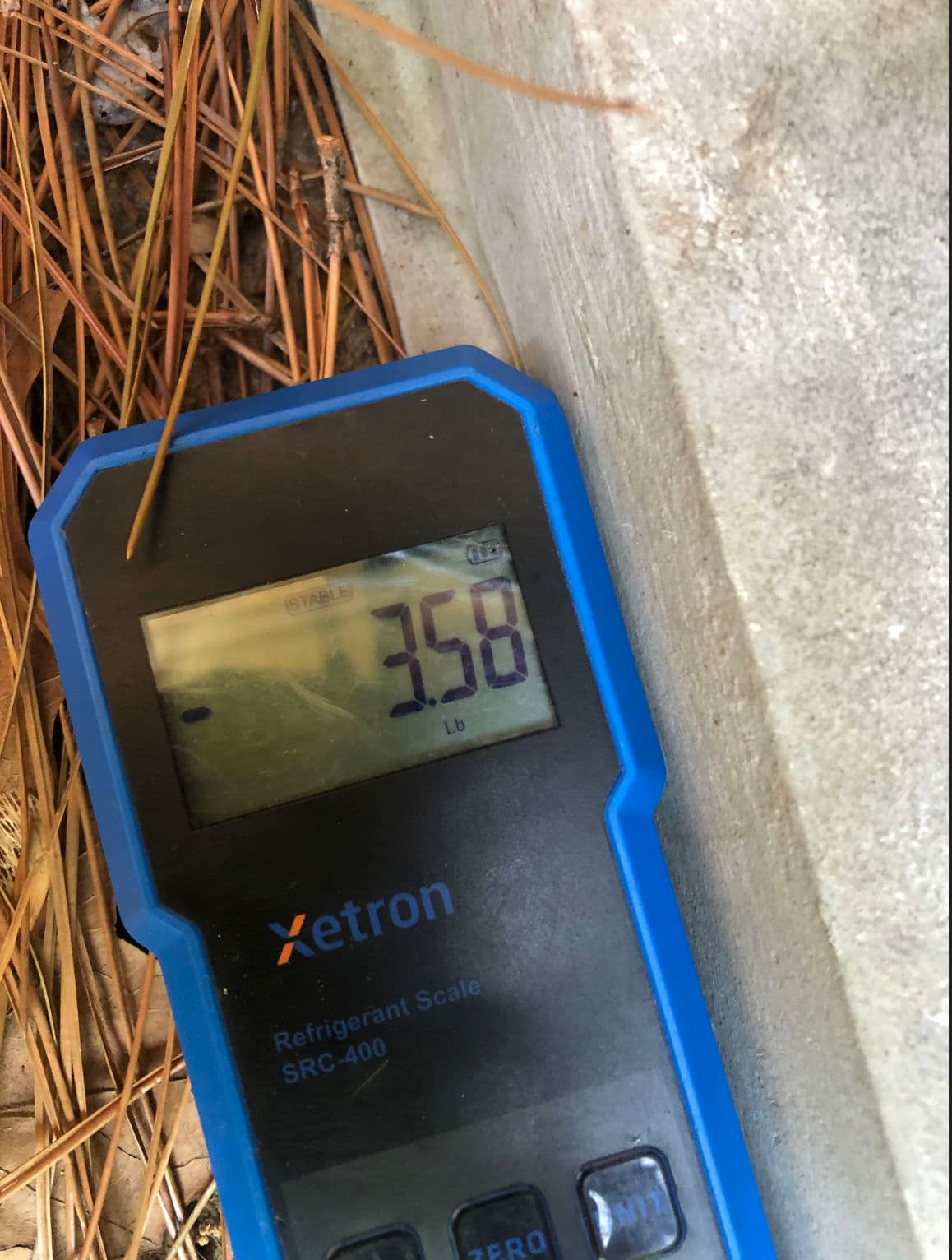
Once we confirmed the diagnosis, we got to work on the recharge. We used a Xetron refrigerant scale to measure exactly how much Freon MO99 - an R-438A refrigerant - went back into the system. Precise charging matters. Too little and the system still underperforms. Too much and you can damage the compressor. We track every pound going in so the charge is dialed in correctly.
This is what HVAC diagnostics is supposed to look like - not a quick glance and a guess, but actual data from actual tools. If your AC is struggling to keep up, we can find out why and fix it the right way.