AC No-Cooling Diagnostic and Refrigerant Recharge Done Right
When an AC stops cooling, the easy answer is just to add refrigerant and call it a day. We don't do that. Low refrigerant is a symptom, not the problem. Our first move is always a full no-cooling diagnostic - figure out what's actually going on before touching anything.
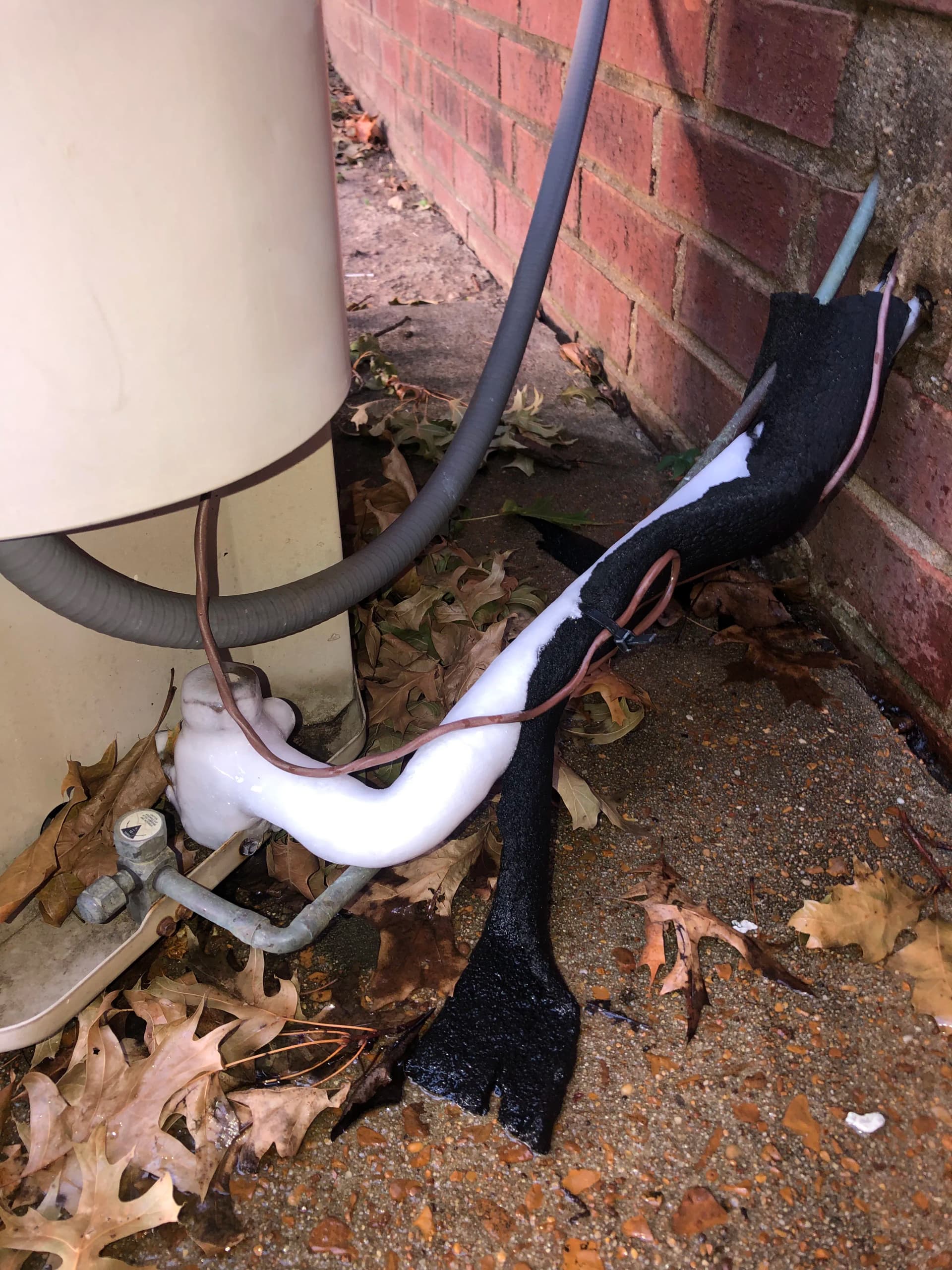
Here's what we were working with on this one. The suction line was completely iced over, which is a classic sign the system had been running severely low on refrigerant for a while. Ice buildup like that tells us the refrigerant charge had dropped to a point where the system couldn't function properly. Running in that condition long enough causes real damage, so catching it matters.
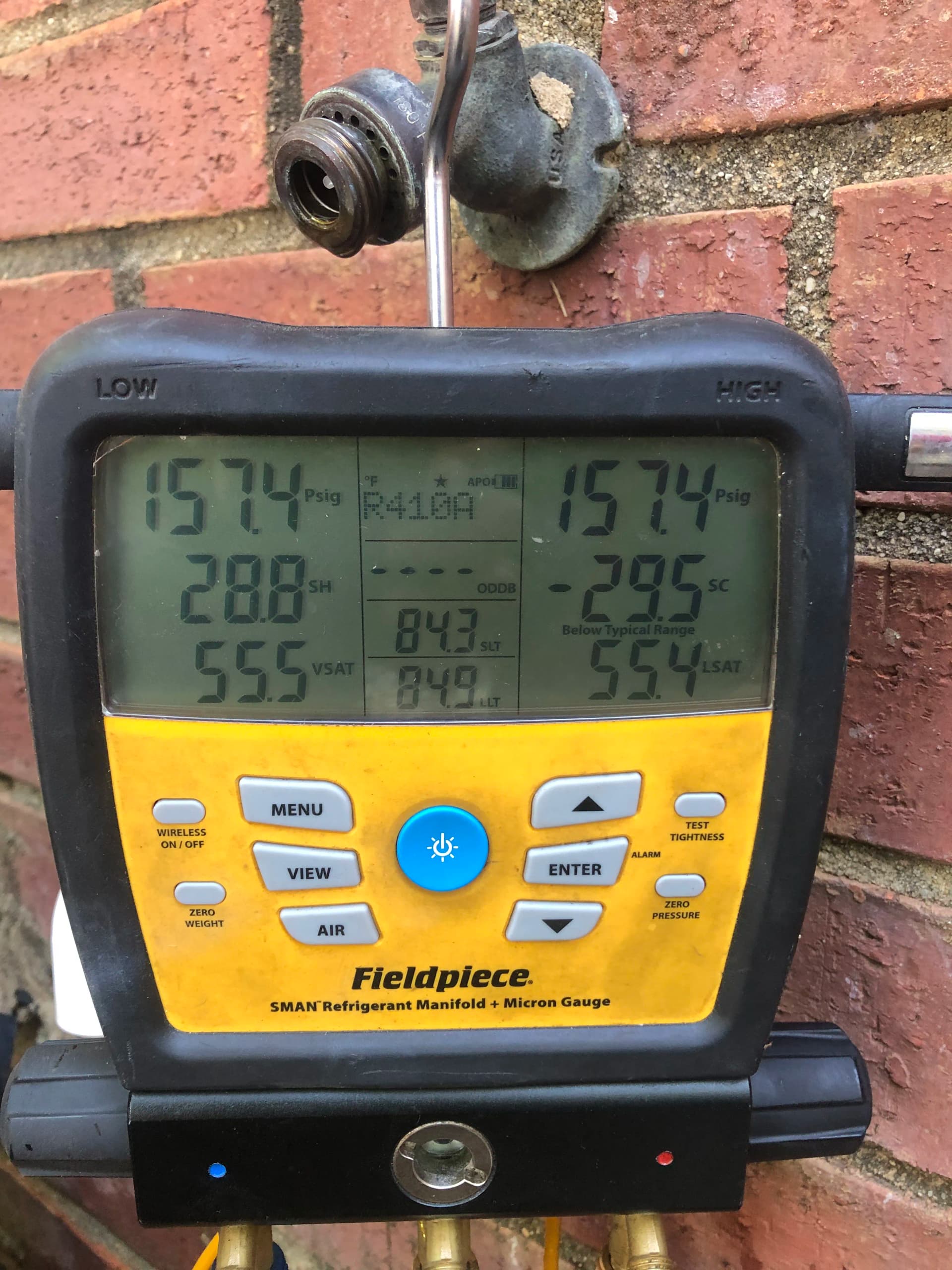
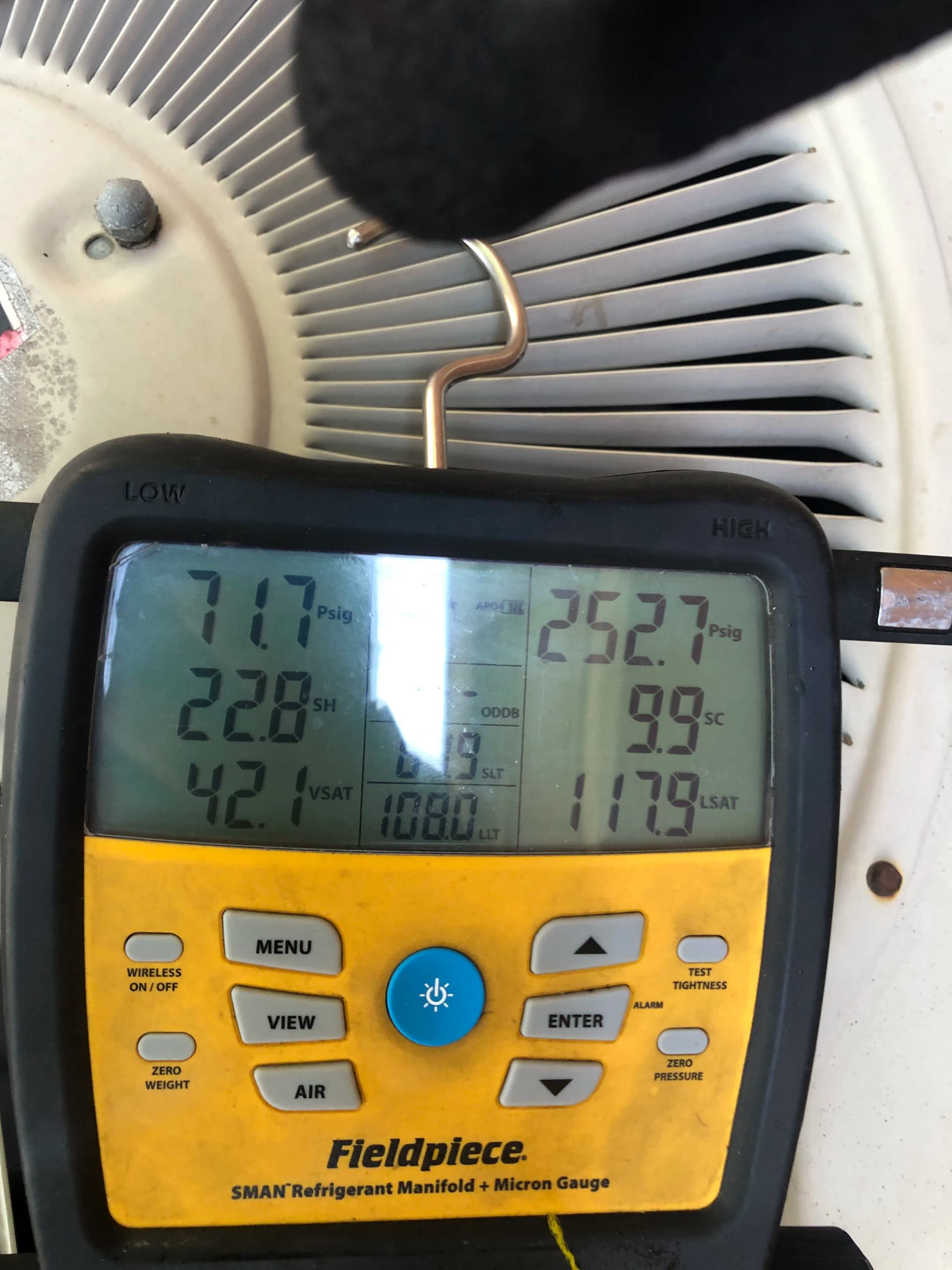
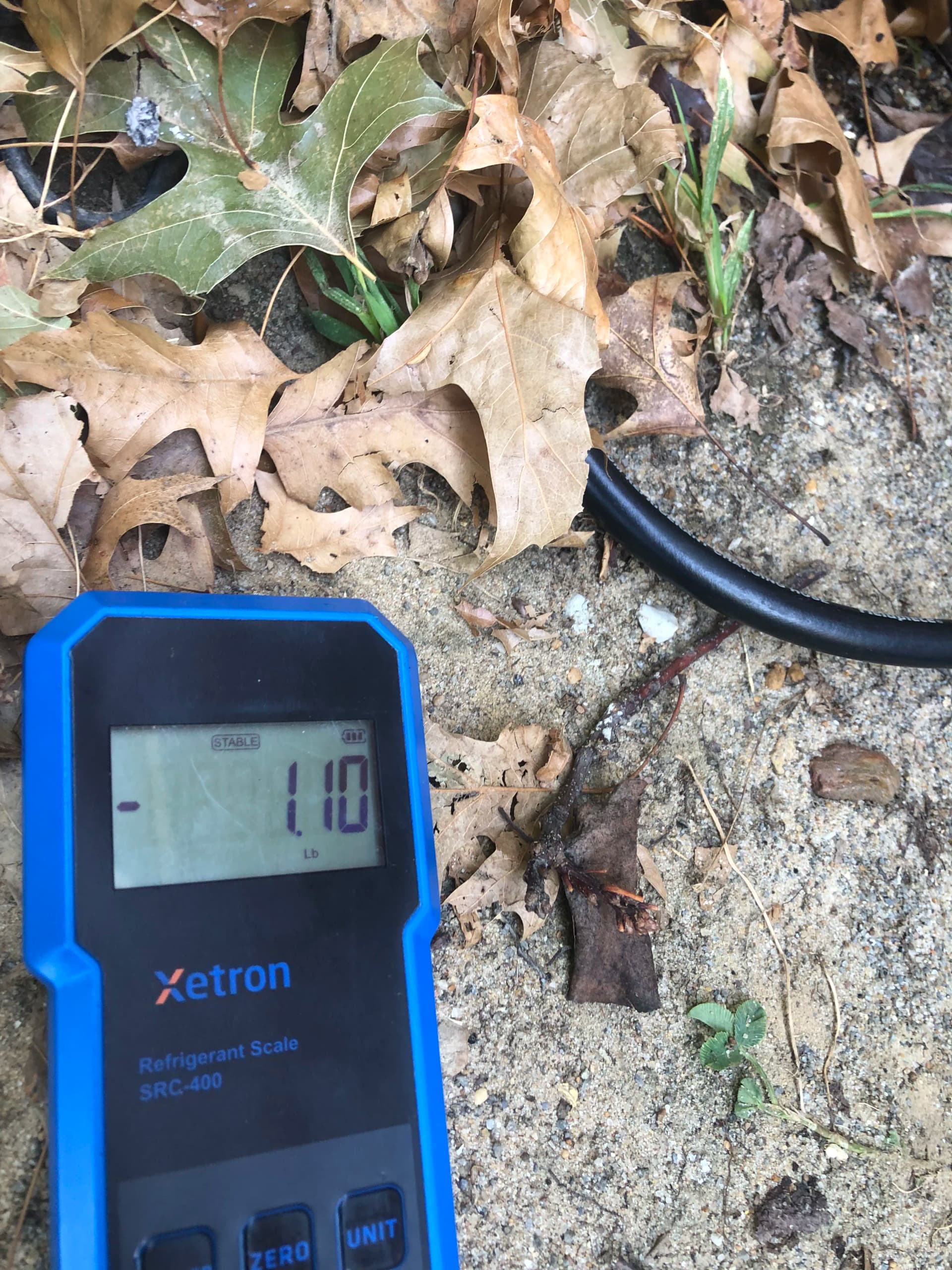
We pulled up readings on the Fieldpiece SMAN refrigerant manifold gauge before and after the recharge. Before the recharge, pressures were badly out of range - the numbers confirmed exactly what the ice was already telling us. After adding refrigerant and getting the charge dialed in, pressures came back to where they needed to be and the system started doing its job again. We also used a refrigerant scale to track exactly how much went in - no guessing, no eyeballing it.
That's the difference between a real repair and a band-aid fix. Knowing how much refrigerant a system took, verifying pressures are correct, and understanding why it was low in the first place - that's what separates a diagnostic approach from just topping off a system and hoping for the best.
If your AC is blowing warm air or struggling to keep up, there's a reason behind it. We'll track it down.