AC Tune-Up Catches What You Can't See Coming
Most AC problems don't announce themselves. The system just runs - maybe a little harder than it used to, maybe not quite as cool - until one day it stops. That's usually the most expensive day of the year. A yearly maintenance visit is specifically designed to find the small stuff before it becomes that day.
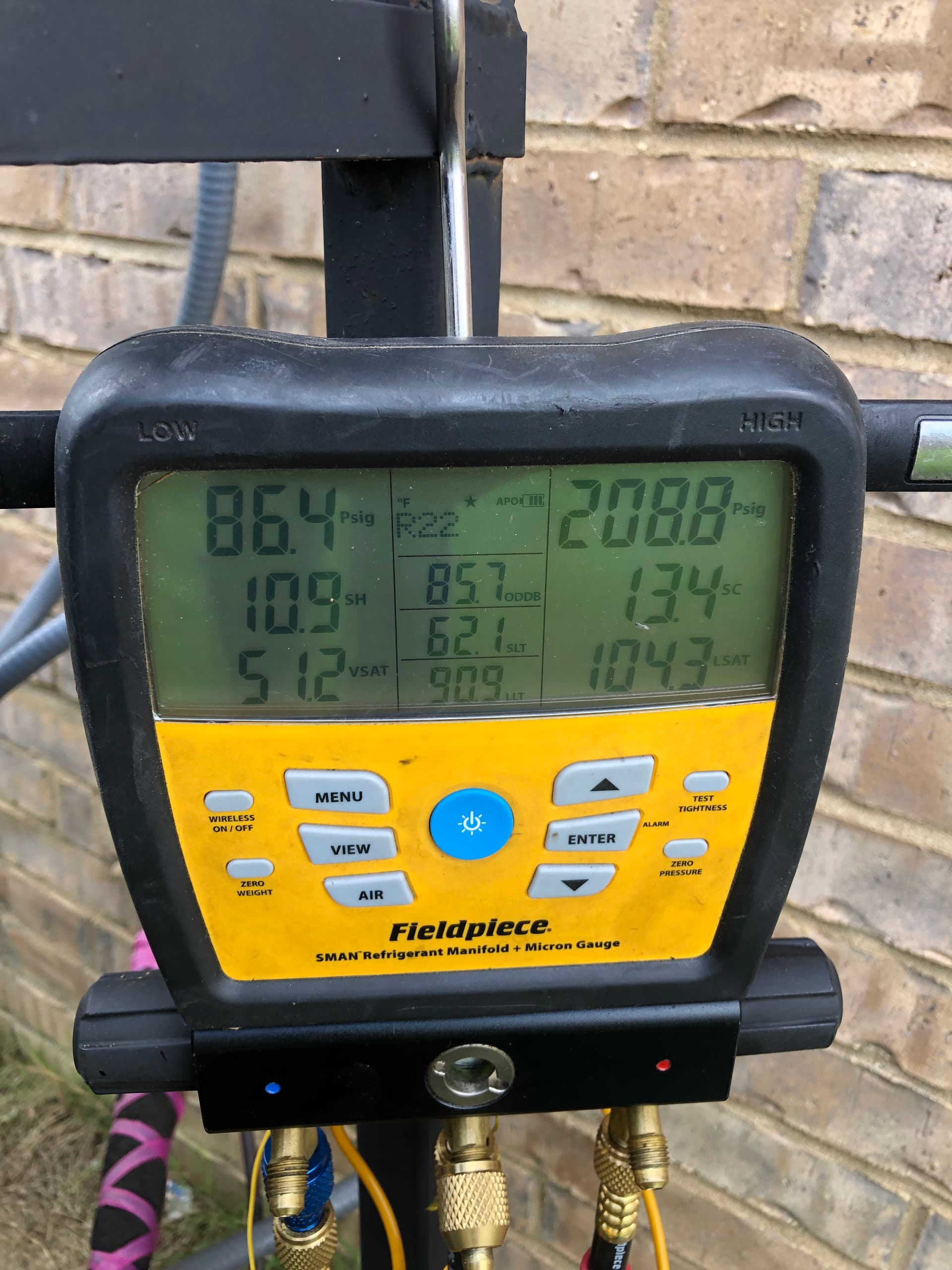
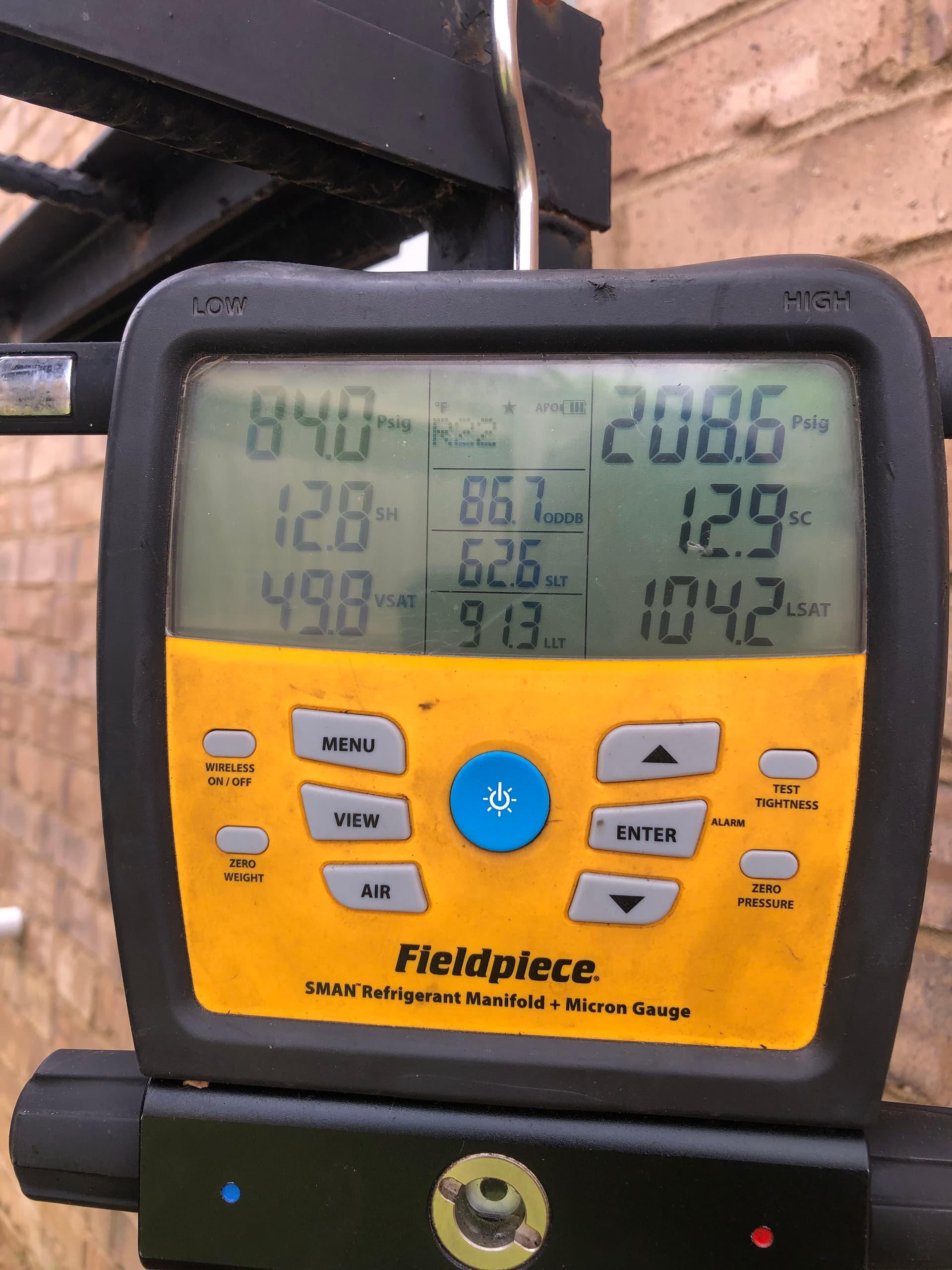
Here's what a real tune-up actually looks like. We hook up a Fieldpiece SMAN refrigerant manifold and pull live pressure, superheat, and subcooling readings from the system. Those numbers tell us exactly how the refrigerant circuit is behaving - whether the charge is right, whether the system is moving heat efficiently, and whether anything is trending in the wrong direction. It's not a quick glance and a filter swap. It's a full HVAC system diagnostic.
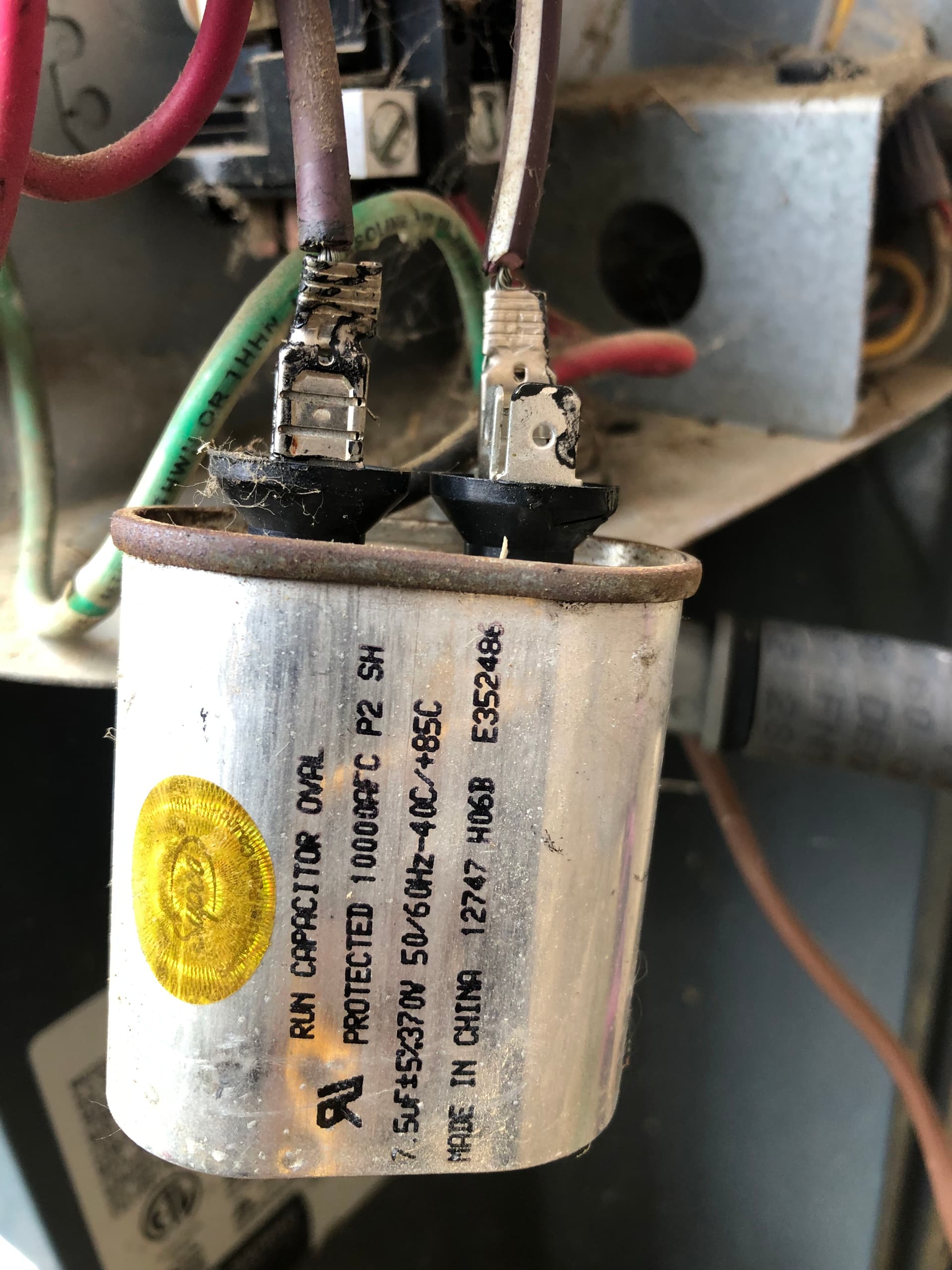
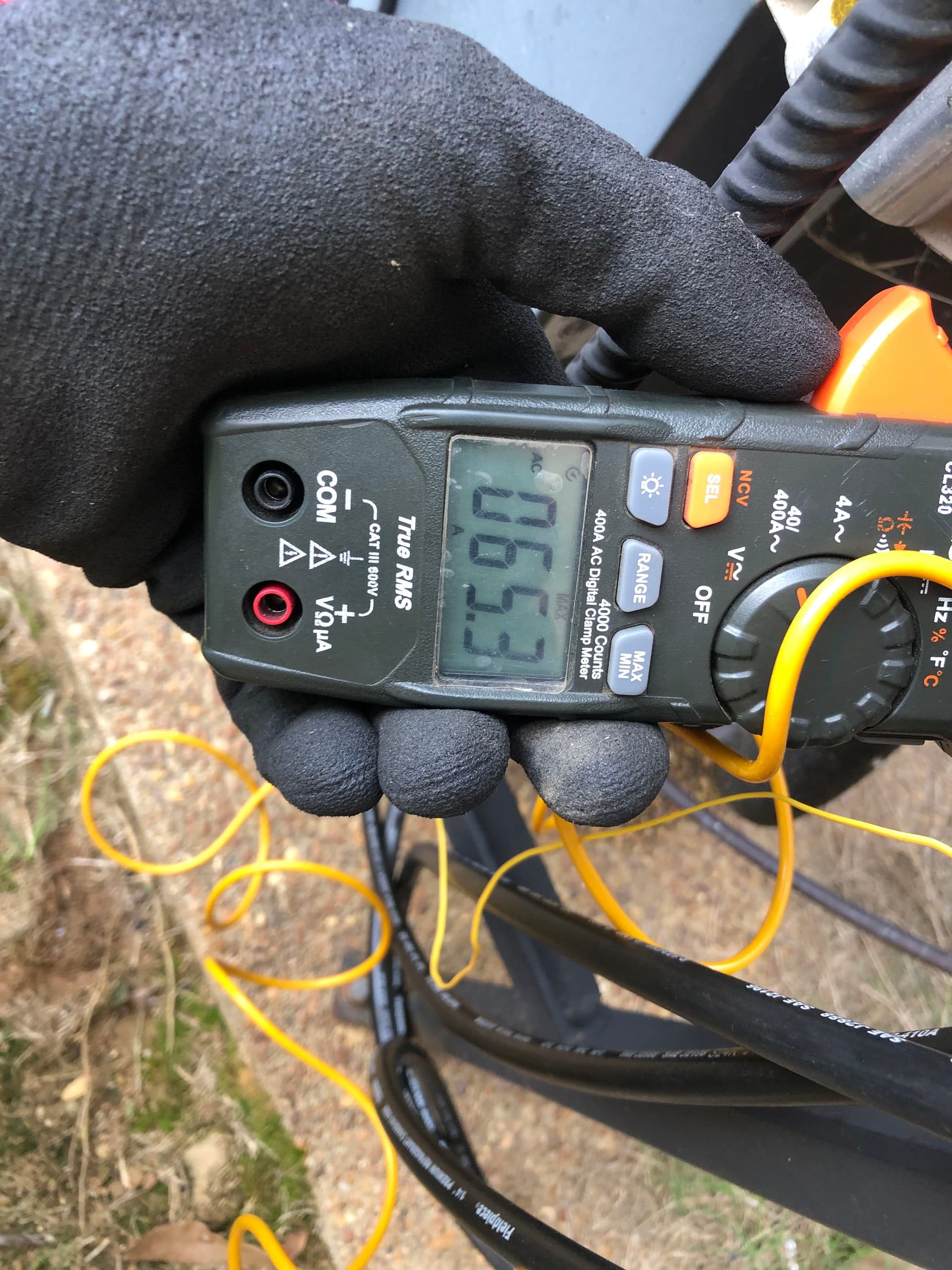
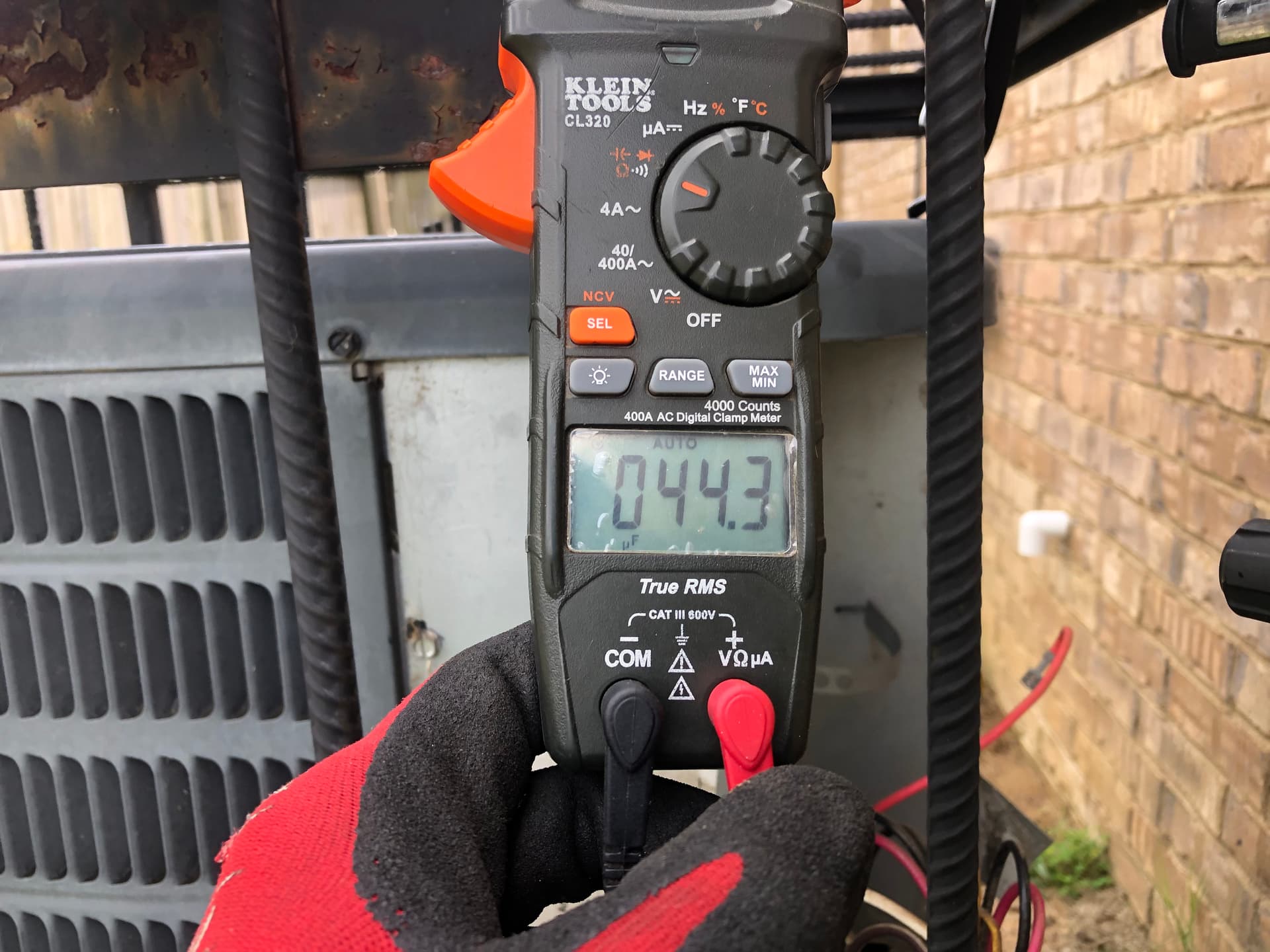
We also check the electrical side thoroughly. Capacitors are one of the most common failure points on any outdoor unit, and a worn-out run capacitor will cause the compressor or fan motor to struggle - or quit entirely - right when you need the system most. We use a Klein Tools clamp meter to test capacitance and amperage draw directly at the unit. If something is out of spec, we catch it here, not during a 95-degree afternoon when you're calling us in a panic.
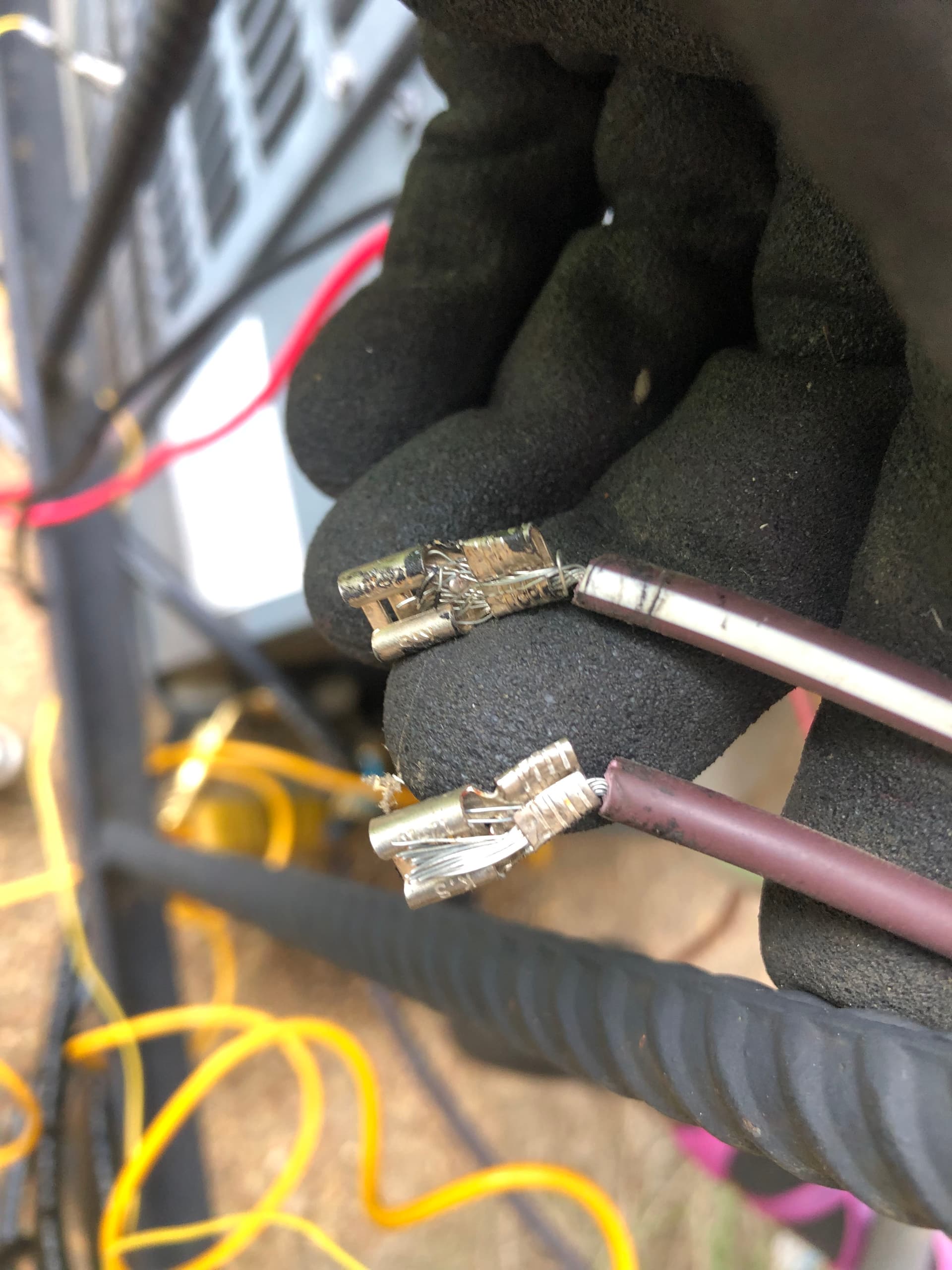
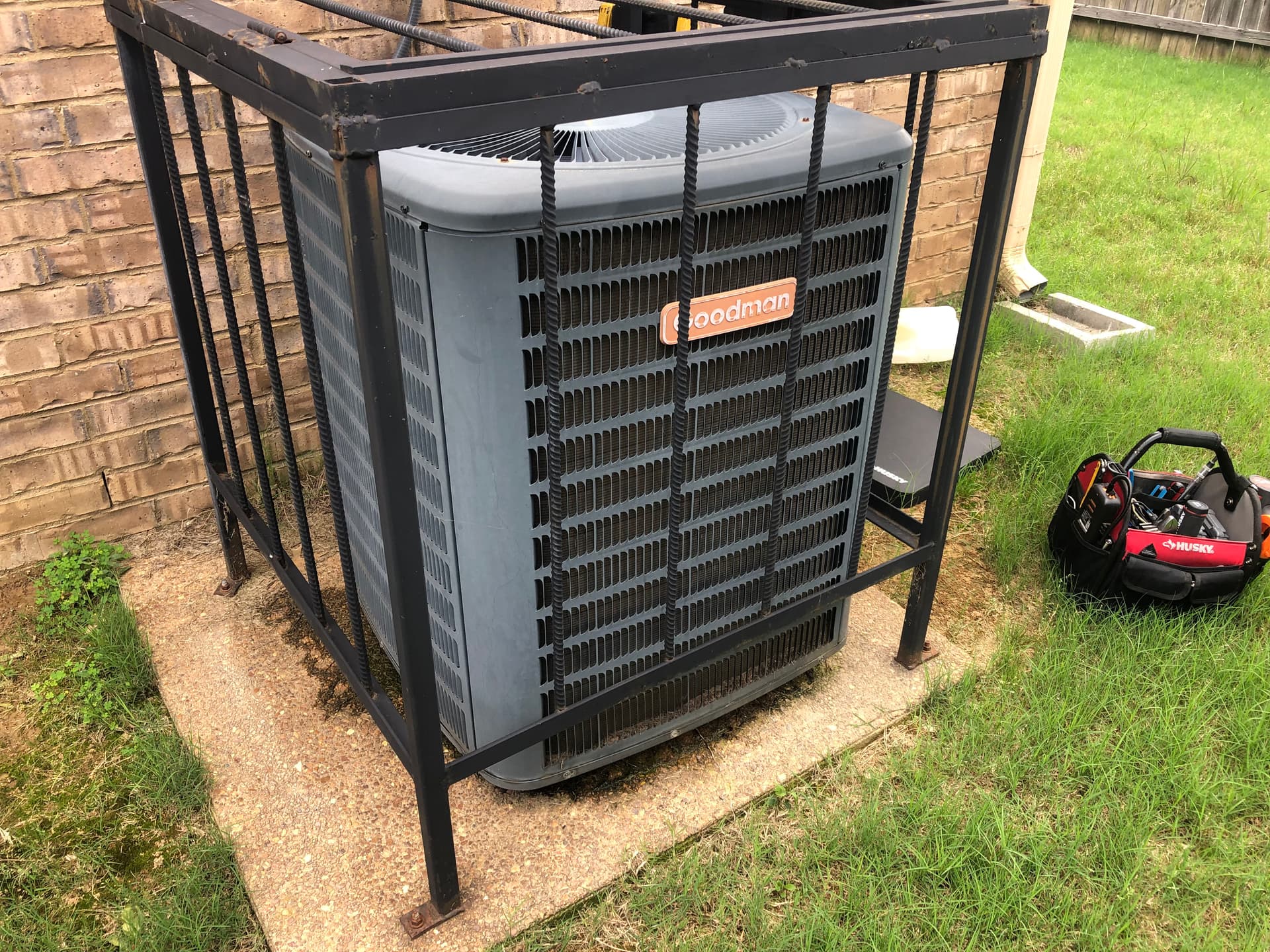
On this Goodman unit, we found a run capacitor showing visible wear at the terminals - the kind of thing you'd never notice from the outside but that's a ticking clock inside the electrical compartment. That's exactly why this kind of AC maintenance visit matters. Catching a worn capacitor early is a fraction of the cost of an emergency AC repair after a full breakdown.
We do this because we'd rather give someone a heads-up and a straightforward fix than show up to a no-cooling call in the middle of summer. If your system hasn't been looked at this year, now is the right time to get it on the schedule.