Burned Capacitor Was Why This AC Stopped Cooling
When a homeowner's AC stops cooling, most people assume the worst - refrigerant leak, compressor failure, full system replacement. A lot of times, though, it comes down to one small electrical component that gave out. That's exactly what we found here.
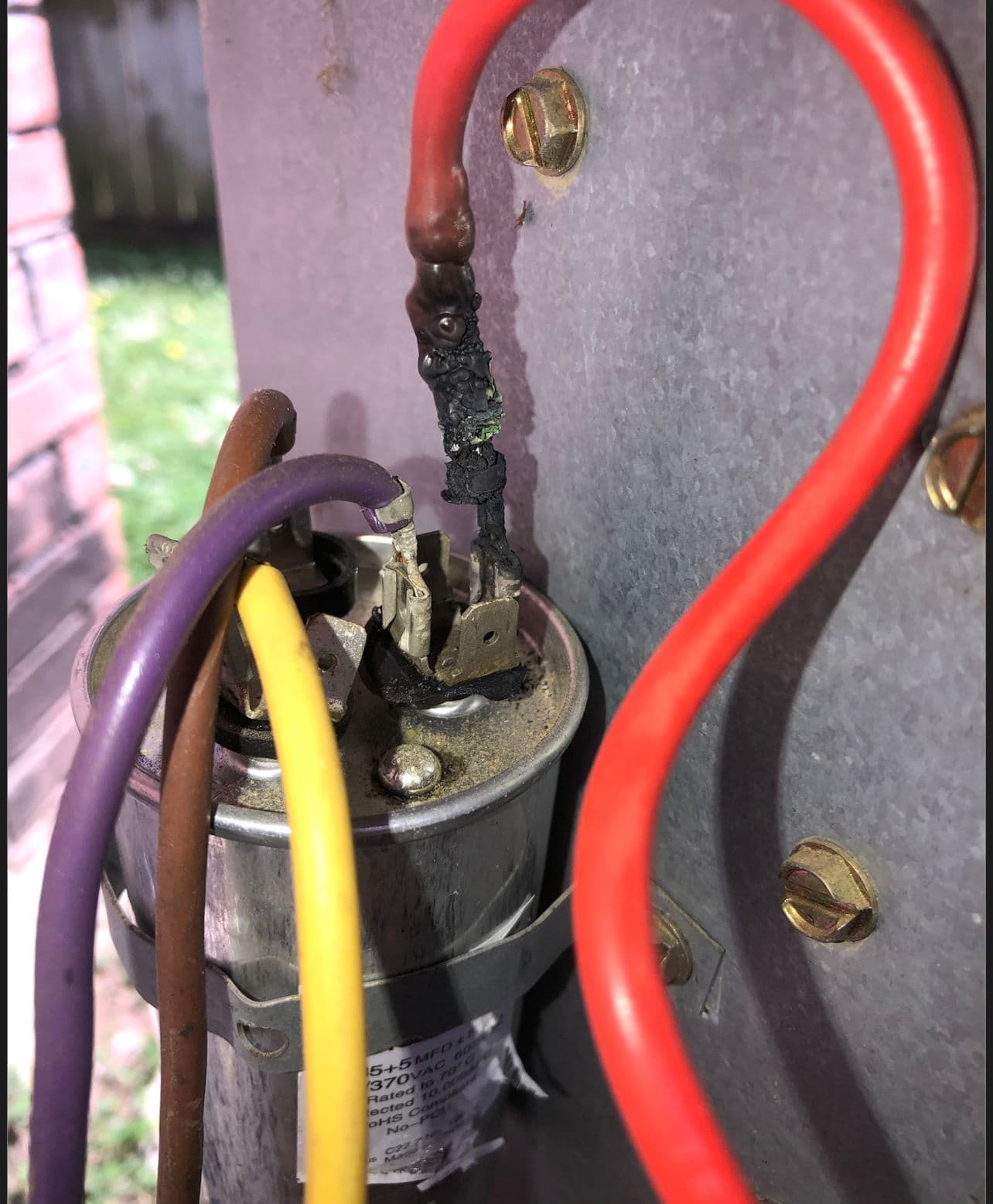
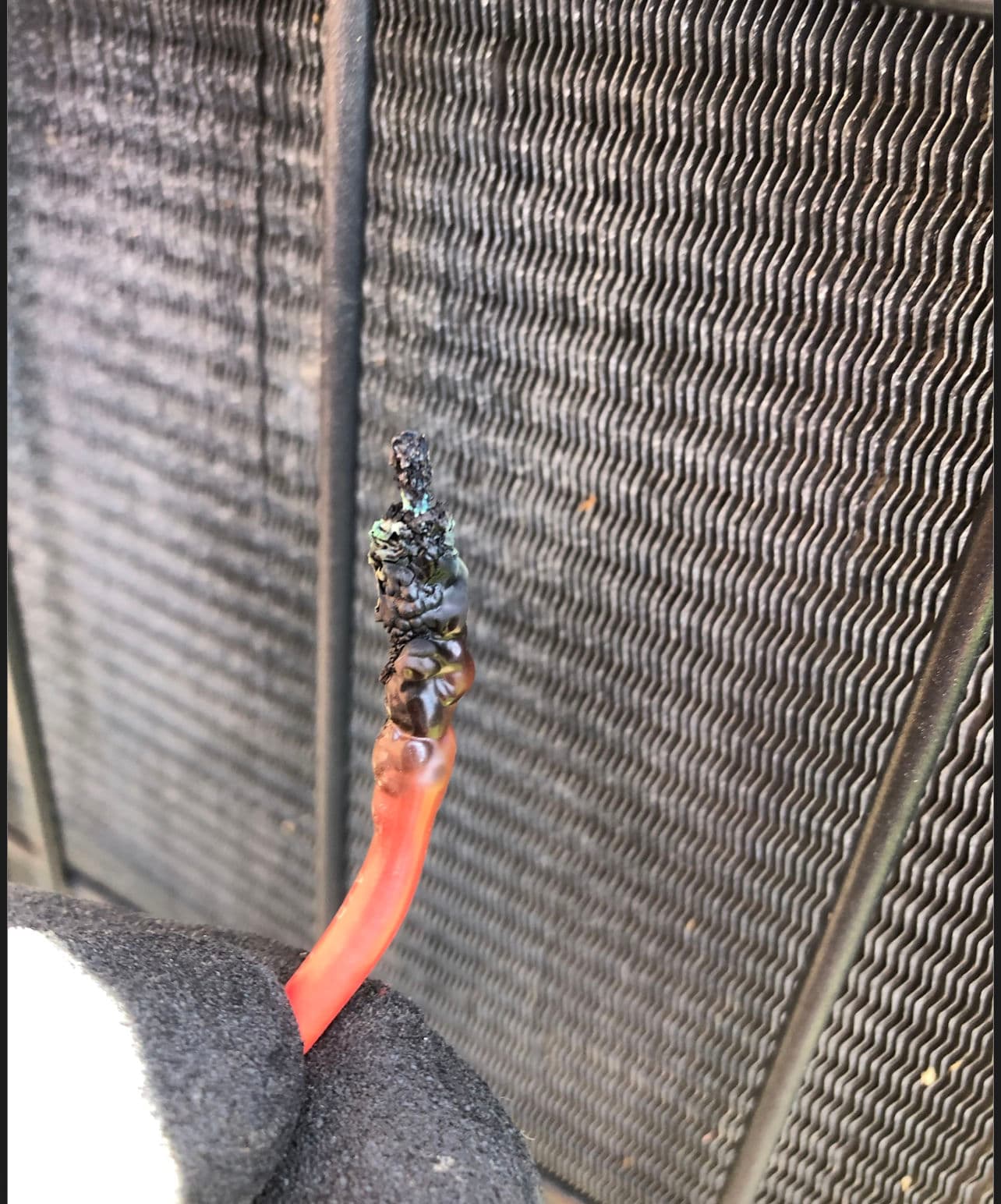
We ran our full no-cooling diagnostic on this unit and it didn't take long to spot the problem. The capacitor had completely burned out. You can see the wire coming off the top of it was totally charred and melted - the insulation gone, the terminal scorched. That kind of heat damage doesn't happen overnight. It builds up over time, and eventually the part just fails. When a capacitor goes, the compressor and fan motors lose the electrical boost they need to start and run properly. No cool air, no matter what the thermostat says.
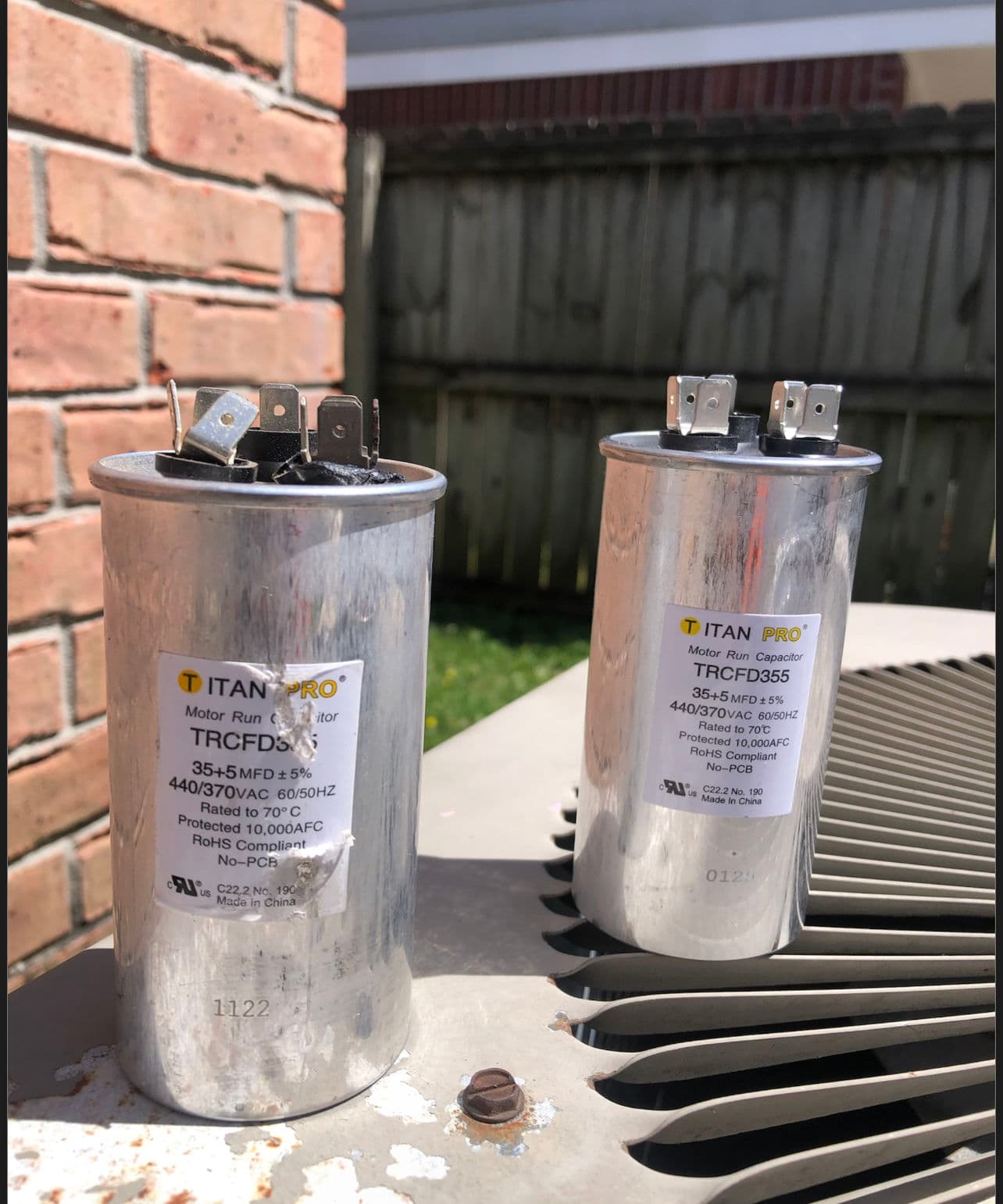
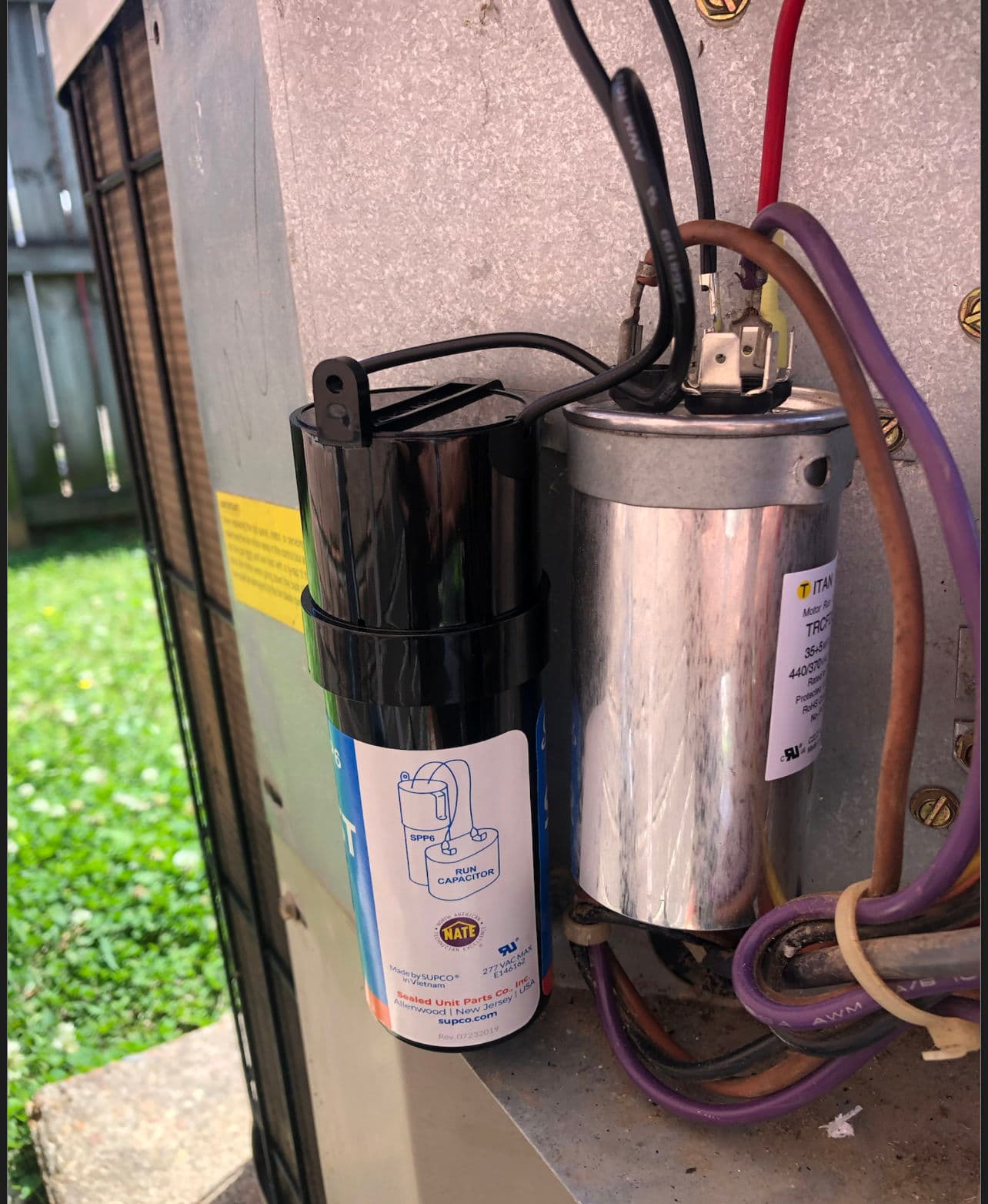
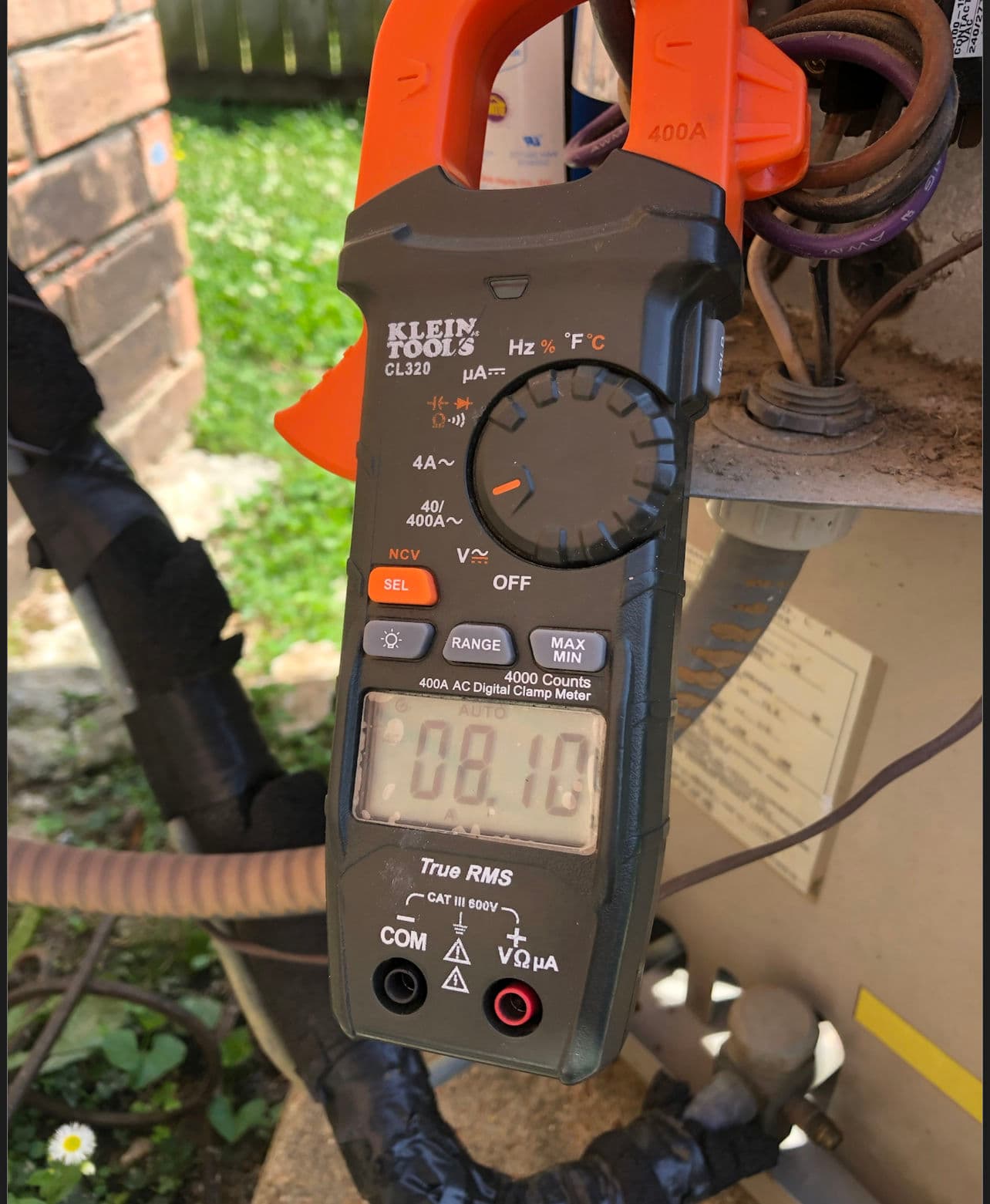
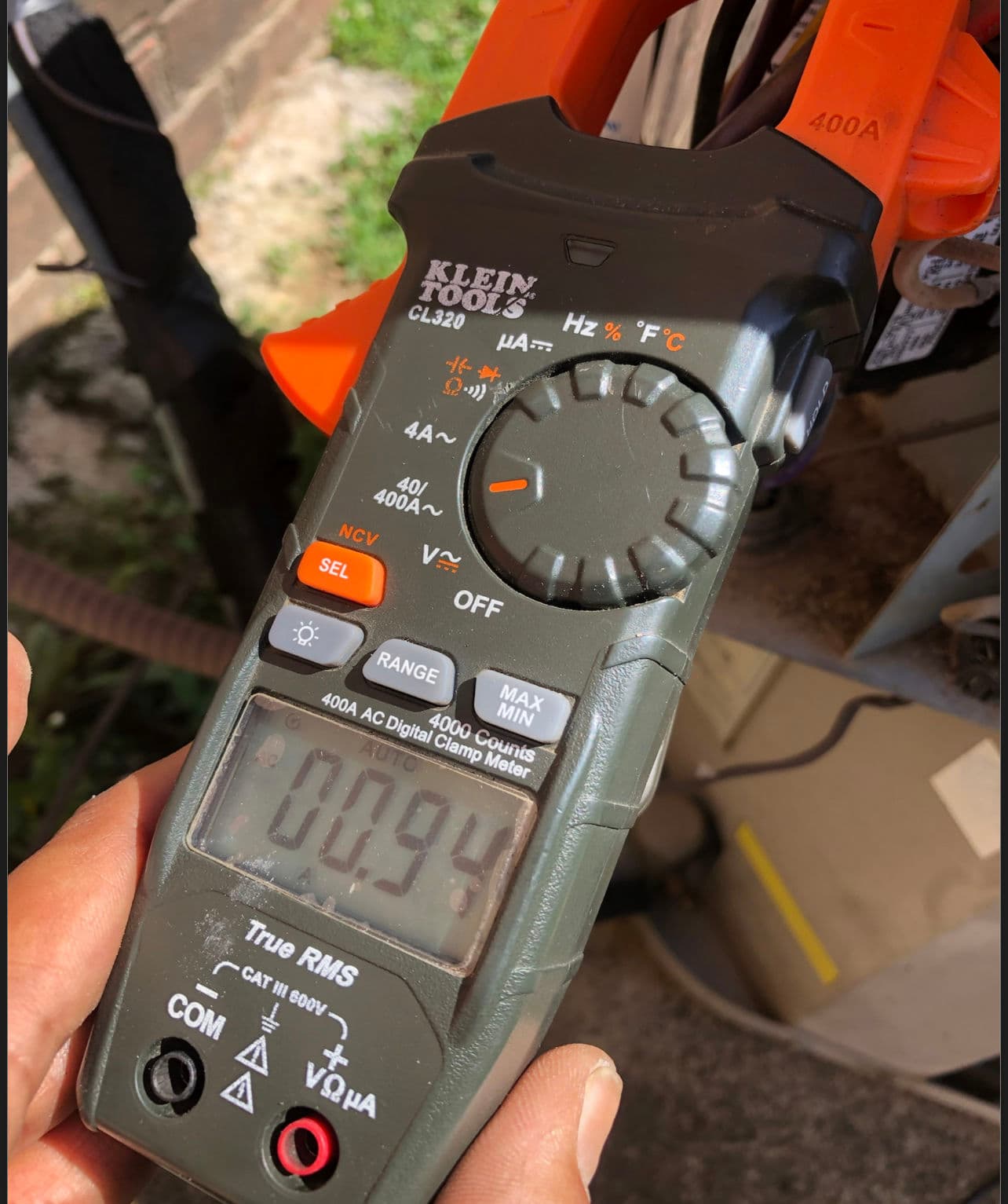
We used a Klein Tools clamp meter to verify exactly what was going on with the system before and after the repair. The readings confirmed what we suspected - the unit wasn't drawing anywhere near the amperage it should have been. Once we swapped in a new Titan Pro 35+5 MFD dual run capacitor and got everything reconnected clean, the numbers came back right and the system fired up the way it's supposed to.
Here's the thing about a burned capacitor - if you let it sit, the damage spreads. The motors start working harder to compensate, which puts stress on the compressor. What starts as a relatively simple fix can turn into a much bigger repair bill down the road. Catching it early matters. That's why we don't skip steps on our HVAC diagnostics. We check the electrical side thoroughly, not just the obvious stuff.
If your unit is running but not cooling, or short-cycling, or just not keeping up the way it used to - those are all signs worth getting checked out. Problems like this one don't fix themselves, and they rarely get cheaper the longer they sit.