Frozen AC Lines and a Refrigerant Recharge That Fixed It
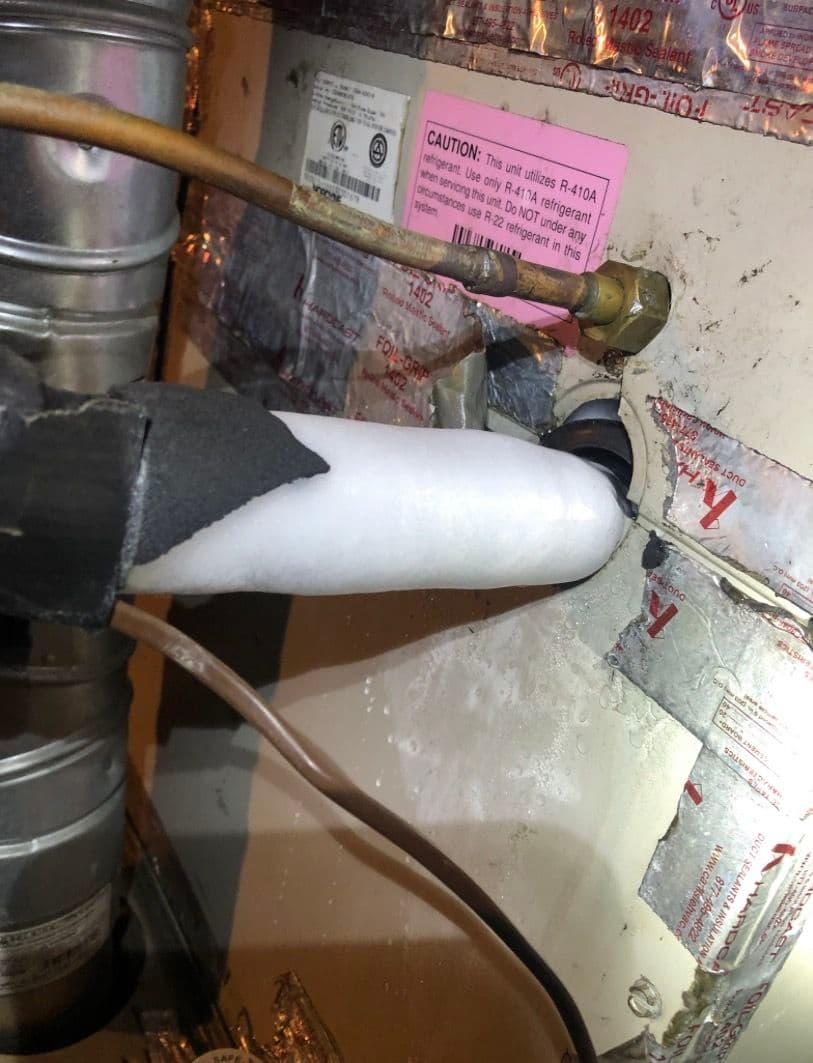
If your AC is running but your house won't cool down, low refrigerant is one of the first things we check. A system that's low on refrigerant doesn't just underperform - it can actually freeze up, causing ice to build on the evaporator coil and lines. That's exactly the kind of situation we walked into on this call.
The frozen pipe you're seeing is a classic symptom of a low-charge system. When refrigerant levels drop too low, the coil gets too cold and moisture in the air freezes right onto the copper lines. At that point, the system is working against itself - airflow gets blocked, cooling drops off further, and if left alone, it can cause real damage to the compressor.
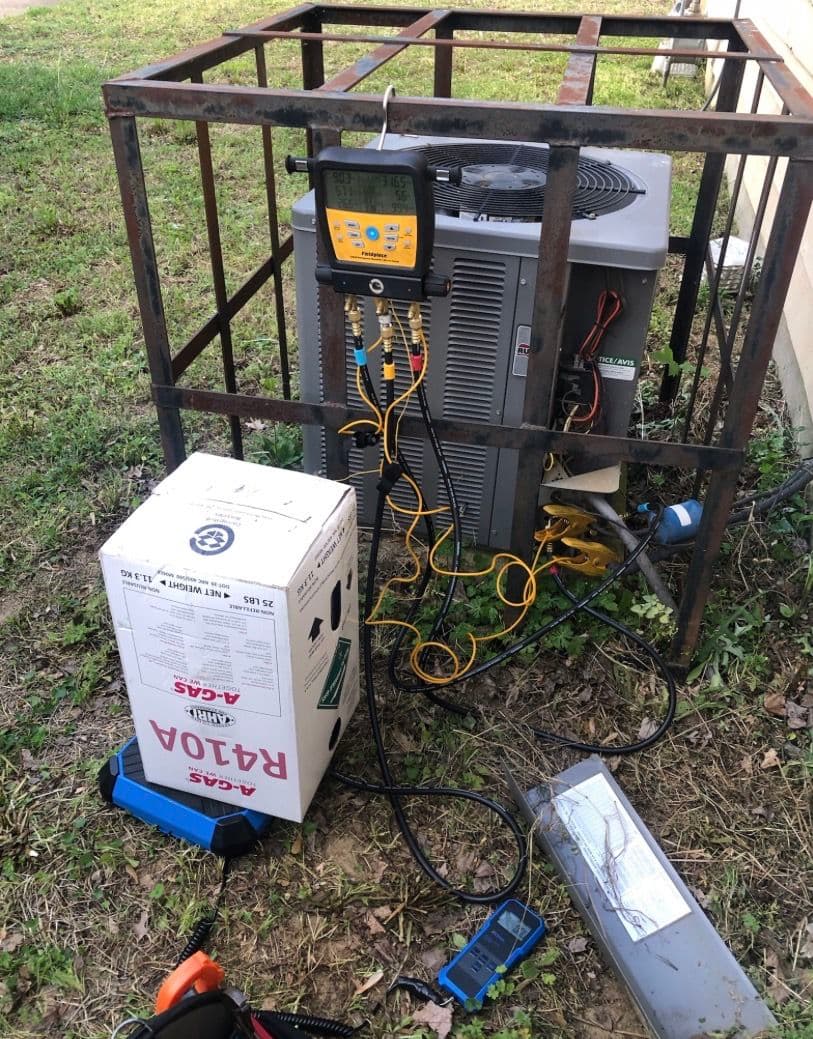
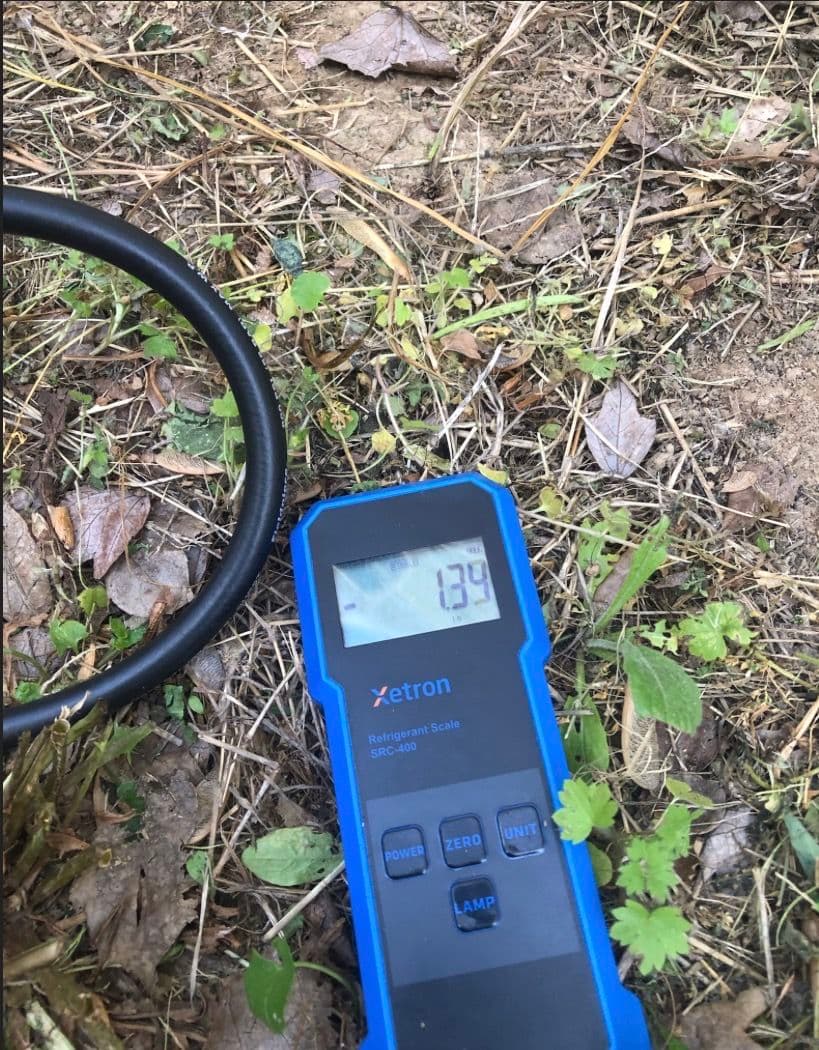
Our first step is always diagnosis before we add anything. We connected our digital manifold gauges to the outdoor unit and monitored the pressures carefully. Getting the numbers right matters - overcharging a system is just as bad as undercharging it. We also use a dedicated refrigerant scale to measure exactly how much R-410A goes in, so there's no guesswork involved. The unit on this call required R-410A specifically, which is clearly labeled right on the system itself.
Once we confirmed the charge was low and identified what was going on, we brought the system up to the correct refrigerant level and verified the pressures were reading where they should be. From there, we let the ice clear and confirmed the system was cooling properly before we packed up. That's the full process - not just topping it off and leaving.
Low refrigerant doesn't fix itself. If your system is icing up, blowing warm air, or running constantly without keeping up, those are signs it needs attention. We handle refrigerant recharge and leak detection for homeowners across the Memphis area and we do it right the first time.